waar bent u naar op zoek?
Een hete uitlaatpijp kan een veel groter thermisch probleem veroorzaken dan de diameter doet vermoeden.
In een voertuig, generatorbehuizing, scheepsmotorruimte of industriële machine kan de uitlaatpijp zich op slechts enkele centimeters afstand bevinden van elektrische bedrading, hydraulische slangen, brandstofleidingen, carrosseriepanelen, sensoren of servicepunten. Zodra het uitlaatsysteem de bedrijfstemperatuur bereikt, kan die kleine afstand cruciaal worden voor het gehele thermische ontwerp.
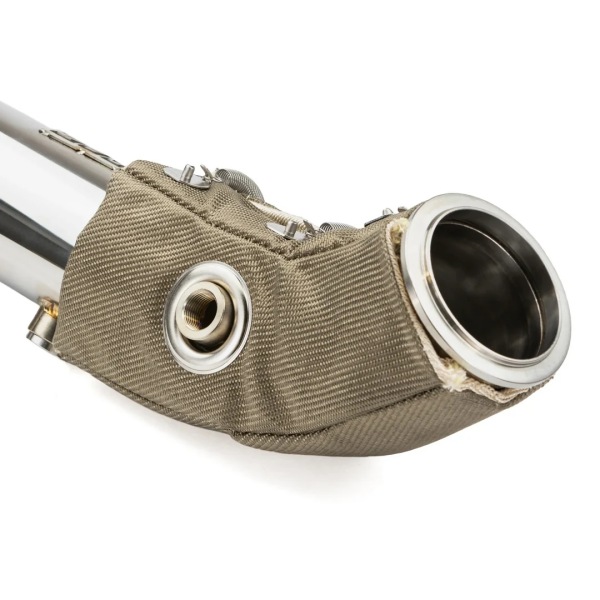
Dit is waaruitlaatpijpisolatiewordt noodzakelijk.
Een goed isolatiesysteem doet meer dan alleen een hete leiding afdekken. Het moet de warmte reguleren en bestand zijn tegen trillingen, herhaalde temperatuurschommelingen, vervuiling, beweging en onderhoud.
Daarom is het kiezen van isolatie op basis van de temperatuurclassificatie alleen zelden voldoende.
BSTFLEX ontwikkeltuitlaatwarmteschildisolatieVoor uitlaatsystemen van auto's, dieselmotoren, schepen, generatoren en industriële toepassingen, waaronder verwijderbare pijpisolatie, isolatiemateriaal, hittebestendige omhulsels, flexibele hulzen en metalen thermische barrières.
Voordat u een isolatiemateriaal kiest, moet u eerst vaststellen welk probleem moet worden opgelost.
Een uitlaatpijp kan isolatie nodig hebben omdat:
Een nabijgelegen kabelboom raakt oververhit;
De temperatuur in de behuizing is te hoog;
Operators worden blootgesteld aan hete oppervlakken;
Er komt warmte in een brandstof- of hydraulische leiding;
De vloer van een voertuig wordt blootgesteld aan overmatige stralingswarmte;
Een machinekamer heeft onvoldoende ventilatie;
De uitlaatpijp moet stroomafwaarts meer warmte vasthouden;
De omliggende apparatuur kan de huidige temperatuur niet verdragen.
Dit zijn verschillende problemen.
Zelfs als de temperatuur van de uitlaatpijp identiek is, kunnen ze verschillende isolatiesystemen vereisen.
Het beschermen van de vloer van een voertuig tegen stralingswarmte kan bijvoorbeeld baat hebben bij een reflecterend scherm, terwijl het verlagen van de buitentemperatuur van een uitlaatpijp van een generator een dikke, verwijderbare isolatiedeken kan vereisen.
Uitlaatpijpisolatie valt over het algemeen in vier praktische categorieën uiteen.
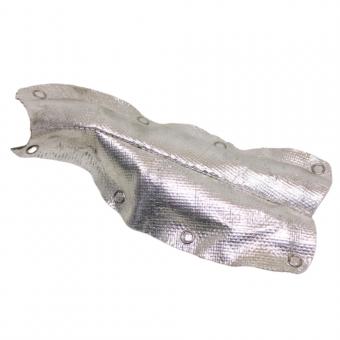
Een verwijderbare isolatiedeken wordt op maat gemaakt voor een specifieke pijpdiameter of uitlaatgeometrie.
Het bevat normaal gesproken:
een interne hittebestendige laag;
thermische isolatie;
een externe beschermlaag;
mechanische bevestiging.
Deze constructie is bijzonder geschikt wanneer toegang voor onderhoud van belang is.
Typische installaties omvatten:
dieselgeneratoren;
scheepsmotoren;
industriële motoren;
grote uitlaatpijpen;
geluiddempers;
uitlaatbochten.
De deken kan uit meerdere delen bestaan in plaats van één lang stuk, waardoor technici alleen het deel hoeven te verwijderen dat nodig is voor inspectie.
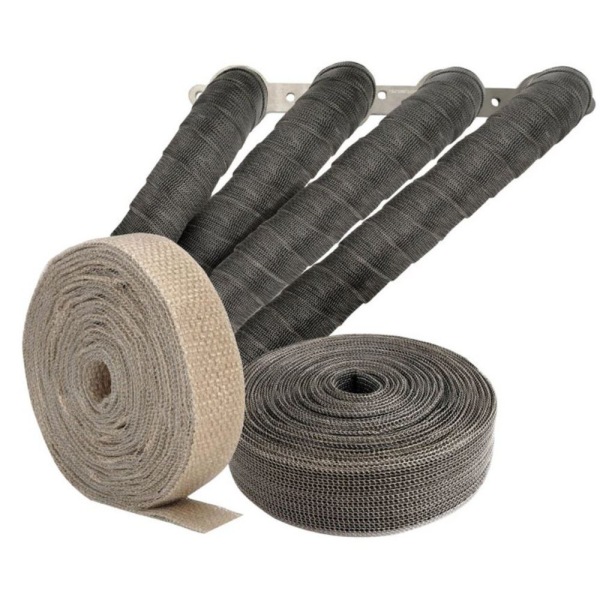
Uitlaatwerende tape wordt geleverd op rollen en spiraalvormig om de pijp gewikkeld.
Het wordt veel gebruikt voor:
auto-uitlaatspruitstukken;
motorfietsen;
prestatieverhogende uitlaatsystemen;
uitlaatbuizen met een kleine diameter;
Uitlaatsystemen op maat.
BSTFLEX levertHittebestendige tape voor uitlaat en spruitstukin verschillende hittebestendige vezelconstructies.
Isolatiemateriaal biedt een eenvoudige manier om lange buisvormige oppervlakken te isoleren, maar is minder handig wanneer het uitlaatsysteem regelmatig geopend moet worden voor onderhoud.
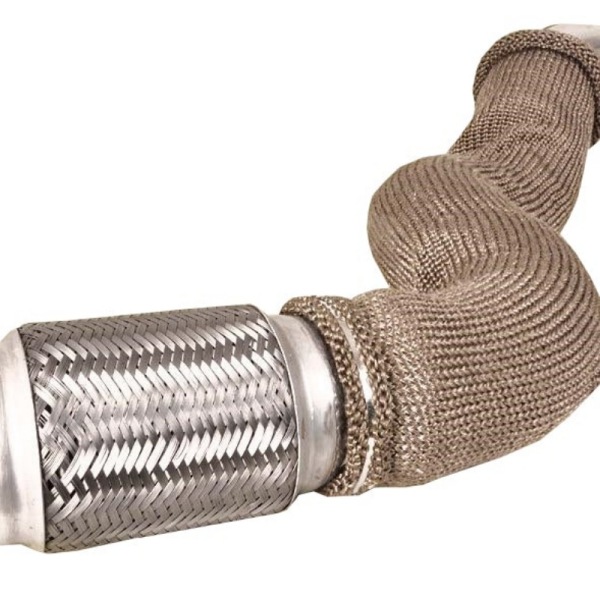
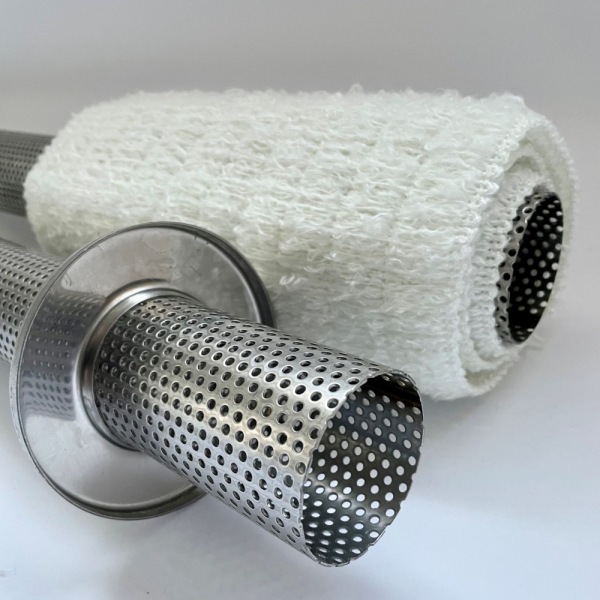
Sommige uitlaatleidingen vereisen een oplossing met een manchet in plaats van een gefabriceerde isolatiemantel.
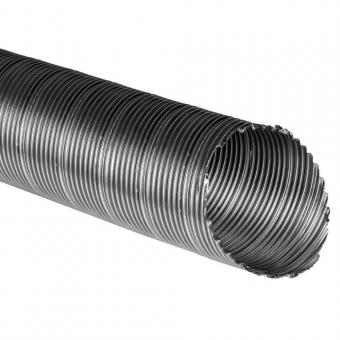
Flexibele isolatie kan worden aangebracht over kleinere uitlaatpijpen waar de diameter en vorm relatief eenvoudig zijn.
Bijvoorbeeld de BSTFLEXIsolatiebekleding voor de uitlaat van een dieselkachelis ontworpen voor compacte uitlaatpijpen die worden gebruikt in toepassingen zoals dieselverwarmingssystemen.
Manchet- en isolatieoplossingen kunnen met name nuttig zijn in de volgende situaties:
De beschikbare installatieruimte is beperkt;
De buis is relatief klein;
Continue dekking is vereist;
Een star schild zou moeilijk te installeren zijn.
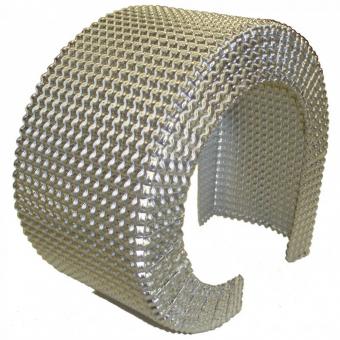
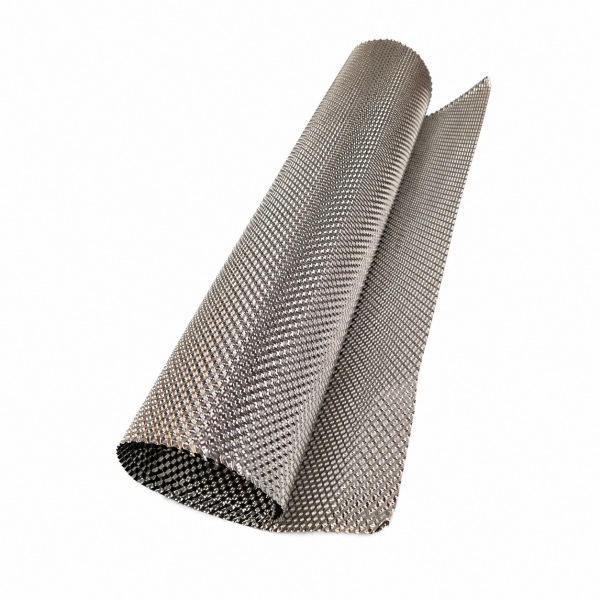
Een metalen afscherming hoeft de buis niet per se te raken.
In plaats daarvan wordt het meestal geïnstalleerd met een gecontroleerde afstand tussen het schild en de warmtebron.
Deze opstelling is bijzonder effectief om de stralingswarmte naar nabijgelegen componenten te verminderen.
Veelgebruikte materialen zijn onder andere:
aluminium;
roestvrij staal;
roestvrij staal met reliëf;
nikkellegeringen.
Een metalen hitteschild kan de voorkeur hebben wanneer:
De installatiedikte moet laag blijven;
Mechanische schokbestendigheid is belangrijk;
Het schild moet een specifieke vorm behouden;
Stralingswarmte is de voornaamste zorg.
Voor veeleisende omgevingen produceert BSTFLEX ookLegering 625 Inconel hitteschildonderdelen.
Deze termen worden vaak door elkaar gebruikt, maar hun technische functie kan verschillen.
Isolatie van de uitlaatpijpNormaal gesproken omsluit het de pijp en beperkt het de warmteoverdracht door een isolerende laag.
Eenhitteschild van de uitlaatpijpNormaal gesproken bevindt deze zich tussen de buis en het onderdeel dat bescherming nodig heeft.
Eén ervan bevat warmte.
De andere blokken leiden het om.
In sommige uitlaatsystemen worden beide gebruikt.
Een dieselmotor kan een verwijderbare isolatiedeken rond de uitlaatpijp hebben, terwijl een roestvrijstalen afscherming een nabijgelegen elektrische behuizing beschermt.
That combination can provide better thermal control than either solution alone.
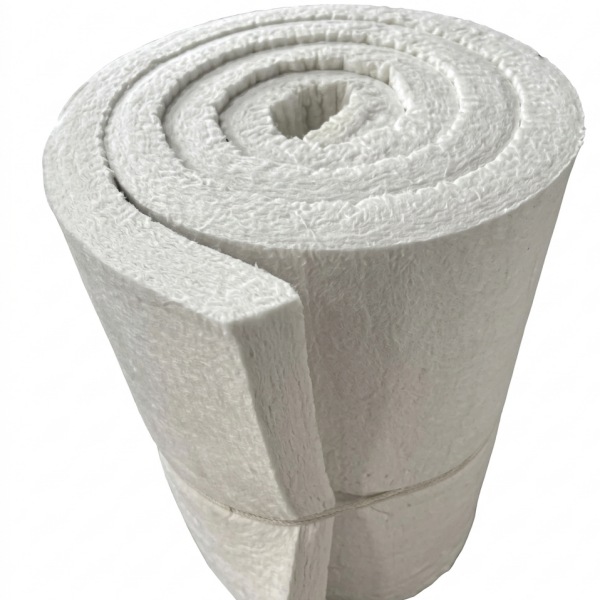
Material selection should begin with continuous operating conditions.
Fiberglass is one of the most widely used materials for exhaust insulation.
Advantages include:
flexibility;
good thermal resistance;
availability in many constructions;
practical manufacturing cost.
Fiberglass can be used in:
blankets;
tapes;
wraps;
sleeves;
composite heat shields.
It is often suitable for moderate and high-temperature exhaust applications where extreme temperature exposure is not continuous.
High silica material is selected when higher heat resistance is required.
It may be used as:
outer fabric;
inner hot-side layer;
insulation textile;
heat-resistant wrap.
Silica constructions are useful around:
turbocharged exhaust systems;
manifolds;
high-output diesel engines;
industrial exhaust equipment.
Basalt-based materials are frequently used in automotive and performance exhaust insulation.
They offer:
flexible installation;
strong heat resistance;
good compatibility with wrapped exhaust tubes.
Basalt is often seen in heat wrap and shaped blanket applications.
Where a greater temperature reduction is required within limited space, high-temperature insulation cores may be used.
These materials are normally enclosed within:
fiberglass fabric;
silica fabric;
stainless steel foil;
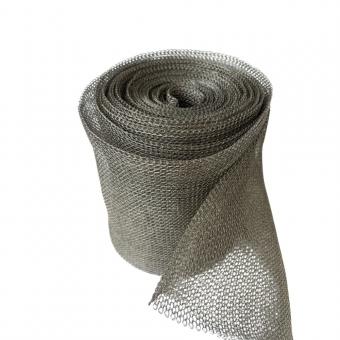
stainless steel mesh.
The insulation core should not be evaluated separately from the blanket construction.
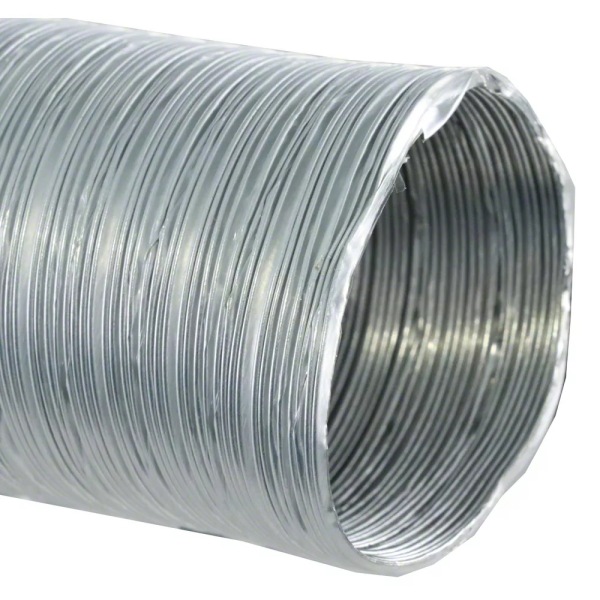
Aluminum is primarily used as a reflective surface rather than a thick insulation medium.
Its low weight makes it particularly suitable for:
automotive underbody protection;
exhaust pipe heat shields;
muffler shields;
vehicle floor insulation.
Stainless steel is preferred where the exhaust heat shield also requires mechanical strength.
It performs well in applications exposed to:
vibration;
road debris;
repeated thermal cycling;
higher temperatures.
Nickel alloys such as Alloy 625 are reserved for demanding environments where temperature, oxidation and corrosion requirements exceed the limits of conventional sheet metals.
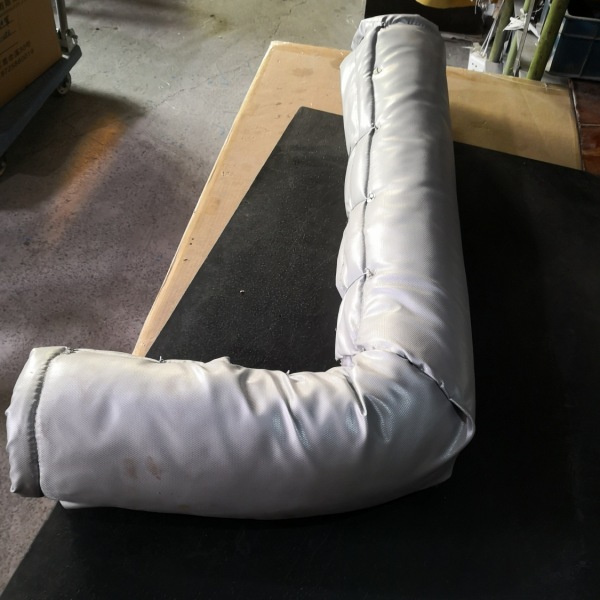
A thicker insulation layer generally reduces heat transfer more effectively, but this does not mean the thickest available blanket is automatically the best design.
Increasing thickness can create problems with:
component clearance;
mounting brackets;
adjacent pipe routing;
sensor access;
engine compartment packaging.
In tightly packaged automotive systems, only a few millimeters of space may be available.
In a large generator enclosure, considerably thicker insulation may be practical.
The correct insulation thickness should therefore balance thermal performance with installation geometry.
Diesel exhaust pipes frequently operate for long periods under load.
Heat containment becomes especially important in:
trucks;
construction equipment;
agricultural machinery;
industrial engines;
stationary power systems.
A removablediesel exhaust pipe insulationsystem can reduce heat released into the surrounding engine compartment while still allowing service access.
Generator exhaust piping often runs through compact acoustic enclosures.
This creates a concentrated heat source close to:
electrical cabinets;
acoustic materials;
engine components;
service areas.
A generator exhaust insulation system commonly uses removable sections around pipes, elbows and silencers.
This also allows the insulation to be removed during maintenance without replacing the entire system.
Marine exhaust systems present additional concerns including:
limited ventilation;
moisture;
salt exposure;
vibration;
restricted service space.
For dry marine exhaust systems, segmented blankets are often preferred because they allow easy access to flanges and exhaust connections.
Passenger and performance vehicles use exhaust insulation for:
headers;
downpipes;
catalytic converters;
center exhaust pipes;
mufflers.
Depending on available space, solutions may include:
wrap;
shaped blanket;
metal shield;
reflective barrier.
Industrial engines and machinery may use large-diameter exhaust lines that require customized blanket sections.
These applications often place greater importance on:
durability;
repeatable installation;
service access;
identification of individual insulation sections.
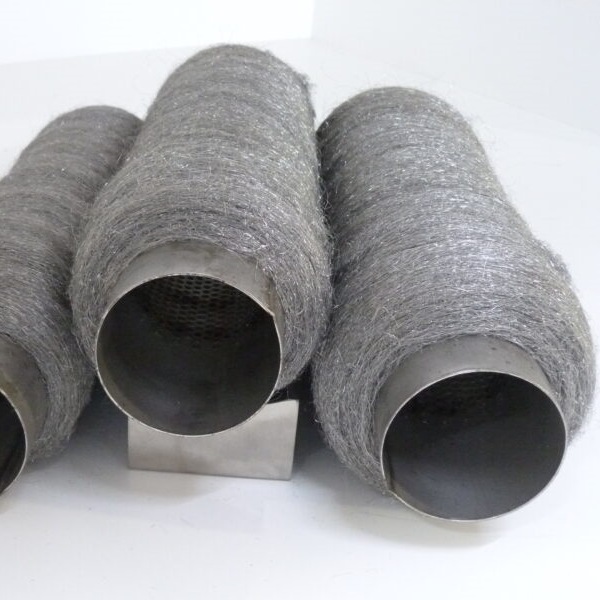
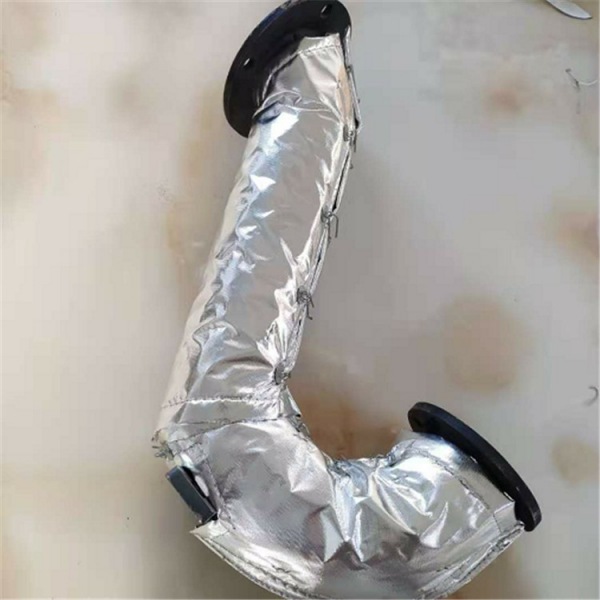
A bend is often more difficult to insulate than a straight pipe.
Wrap can follow gradual bends, but large industrial elbows may benefit from a fitted insulation blanket.
The BSTFLEXThermal Insulation Elbow Blanketis designed for curved exhaust geometry where a standard flat insulation section cannot maintain consistent coverage.
A well-designed elbow blanket should consider:
bend radius;
flange position;
pipe diameter;
seam location;
fastener access.
One of the most common weaknesses in an exhaust insulation system is the flange area.
A thick blanket may work well on the pipe but leave a large exposed metal flange.
That exposed section can become a strong local heat source.
For higher-performance systems, insulation should therefore be designed around:
flange diameter;
bolt access;
connection points;
sensors;
expansion joints.
A removable flap or separate flange blanket may be used where regular access is required.
For serious OEM projects, saying “we need exhaust insulation” is not enough.
A better specification is:
exhaust pipe operating temperature;
ambient temperature;
pipe diameter;
required outer surface temperature;
insulation thickness limit;
airflow condition.
This allows the insulation design to be evaluated against a measurable target.
Without these conditions, it is difficult to compare two insulation systems accurately.
Maintenance requirements are particularly important for:
marine engines;
generators;
mining equipment;
construction machinery;
industrial engines.
If technicians need frequent access to exhaust joints or engine components, permanent wrap can create additional maintenance work.
A removable blanket is usually more practical in these situations.
A segmented system may be designed so that:
each section has an identification mark;
only the required section is removed;
the blanket can be reinstalled after inspection.
This reduces disruption during service.
A high published temperature rating does not guarantee that the complete insulation system will perform correctly.
The full assembly must be considered.
An insulation material that performs well in a laboratory may fail quickly if it rubs continuously against a bracket or neighboring component.
Insulation should not prevent access to:
sensors;
clamps;
inspection ports;
flange bolts.
An exhaust system may need different thermal solutions in different areas.
For example:
manifold: shaped blanket;
straight pipe: wrap;
elbow: removable blanket;
muffler: metal shield.
The outer layer must suit the operating environment, not just the temperature.
Instead of selecting exhaust insulation by material name, use the following sequence.
For a simple tubular pipe:
Consider exhaust wrap or sleeve insulation.
For a pipe that requires regular inspection:
Use a removable pipe insulation blanket.
For an irregular elbow or flange:
Use a custom shaped blanket.
For protecting a nearby panel from radiant heat:
Use a metal or reflective heat shield.
For extreme heat and demanding environments:
Evaluate high-silica, high-temperature fiber, stainless steel or nickel-alloy constructions.
This approach is more reliable than choosing one product type for the complete exhaust system.
For accurate design and quotation, provide:
Pipe dimensions
outside diameter;
overall insulated length;
bend radius;
flange dimensions.
Temperature
normal operating temperature;
maximum temperature.
Installation environment
automotive;
marine;
generator;
industrial;
outdoor;
enclosed.
Service requirement
removable;
permanent;
frequency of maintenance.
Performance requirement
target external temperature;
maximum insulation thickness.
Project information
sample or drawing;
prototype quantity;
expected production volume.
The more complete the input data, the easier it is to design an insulation system that fits correctly from the first prototype.
Exhaust pipe insulation is worth considering whenever an exhaust line creates unacceptable heat exposure for the surrounding system.
The decision should be driven by actual conditions rather than by appearance.
If the objective is to lower heat around the pipe, protect surrounding components or create a safer service environment, an insulation blanket, wrap, sleeve or heat shield may be appropriate.
For applications involving multiple exhaust components, the best result often comes from combining several insulation methods.
BSTFLEX manufacturesexhaust heat shield insulation, removable blankets, exhaust wraps, lagging and custom metal heat shields for automotive, marine, diesel, generator and industrial exhaust systems.
Voor maatwerk isolatie voor uitlaatpijpen dient u de pijpafmetingen, de bedrijfstemperatuur, de installatieomgeving en de benodigde hoeveelheid door te geven. Op basis van deze specificaties kan een geschikte isolatieconstructie worden geselecteerd, afgestemd op het specifieke uitlaatsysteem in plaats van een algemene temperatuurclassificatie.

No.10, Chuangxin North Road, Nanshan Park, Ningguo Economic and Technological Development Zone, Ningguo City, Anhui Province, China
tel/Whatsapp : 0086-15856303740
e-mail : sales@bstbraidedsleeve.com
Skype : vanesa-cheng