waar bent u naar op zoek?
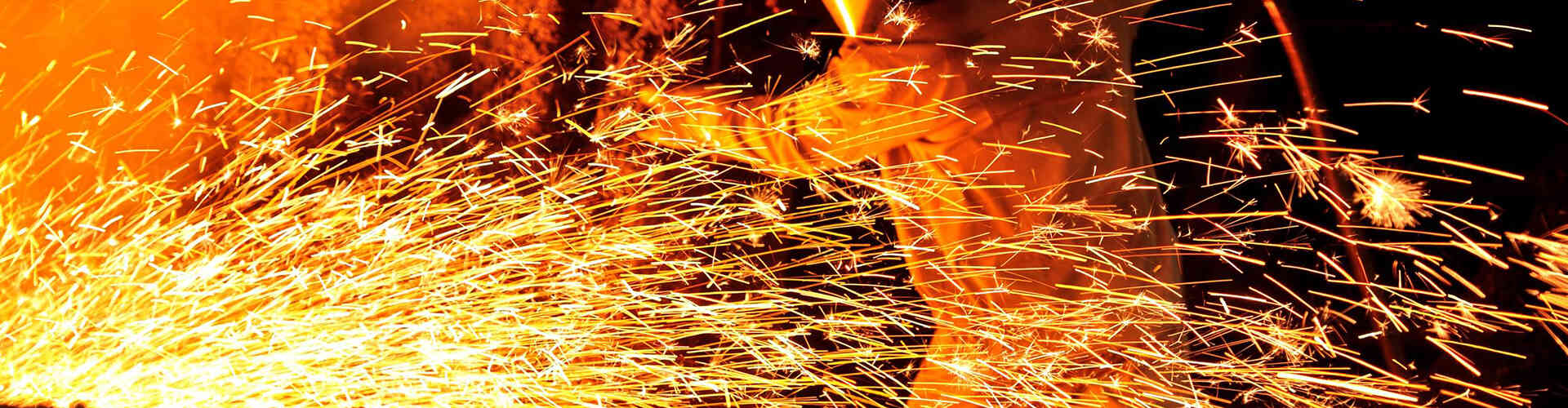
Bij een absorptiedemper vormt de geperforeerde kern slechts een deel van het akoestische systeem. Het materiaal rondom die kern heeft een directe invloed op het uitlaatgeluid, de geluidskwaliteit, de thermische stabiliteit, de levensduur van de vulling en de algehele conditie van de demper.
Dat materiaal staat algemeen bekend alsuitlaatdempervulling.
Afhankelijk van het ontwerp van het uitlaatsysteem en de markt, kan hetzelfde onderdeel ook worden omschreven alsuitlaatdemper dekmateriaal,uitlaatdempervulling, geluiddempervulling, uitlaatpakkingmateriaal, akoestische vulling, geluiddemperwol of uitlaatdempend materiaal.
BSTFLEX levert en ontwikkelt hittebestendige pakkingmaterialen voor motorfietsdempers, auto-uitlaatsystemen, racedempers, industriële dempers, generatoren en andere uitlaatsystemen.
Ontdek het complete assortimentuitlaatdemper dekmateriaal.
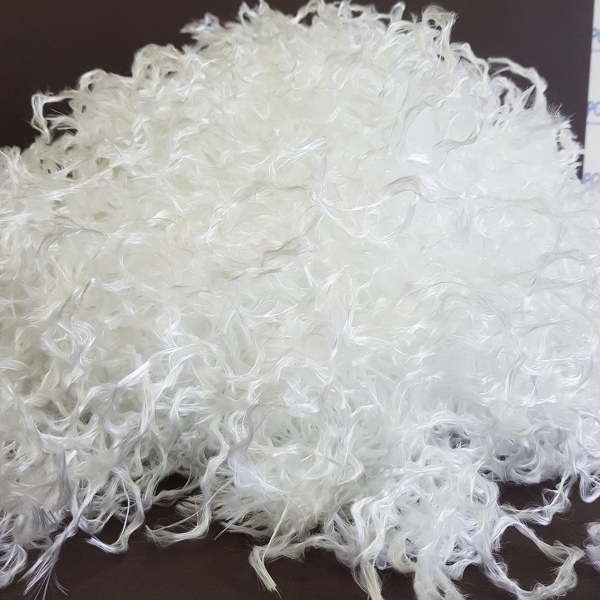
Een typische absorptiedemper is opgebouwd rond een relatief eenvoudige constructie:
Uitlaatgasstroom → geperforeerde buis → beschermende vezellaag → akoestische vulling → buitenmantel
De uitlaatgassen stromen door de geperforeerde kern. Akoestische energie wordt door de perforaties doorgegeven en komt in het omringende vezelmateriaal terecht.
In plaats van alleen te vertrouwen op kamers of beperkende schotten, zet de vulling een deel van deze akoestische energie om in zeer kleine hoeveelheden warmte door wrijving binnen de vezelstructuur.
Om ervoor te zorgen dat het systeem blijft werken, moet de verpakking intact blijven:
thermisch stabiel,
voldoende veerkrachtig,
bestand tegen erosie door uitlaatpulsen,
correct verpakt rond de kern,
en in staat om zijn vezelstructuur te behouden na herhaaldelijk verwarmen en afkoelen.
Daarom is het kiezen van een uitlaatdempermateriaal uitsluitend op basis van de temperatuurclassificatie zelden voldoende.
Dempingsmateriaal in een uitlaatdemper vervult meerdere functies tegelijk.
De open vezelstructuur absorbeert de geluidsenergie die door uitlaatpulsen wordt gegenereerd. Dit is met name belangrijk bij doorstroomdempers en prestatiedempers waarbij de gasstroom door een geperforeerde centrale buis loopt.
De verpakkingsconditie kan niet alleen de geluidsdruk, maar ook de uitlaatklank beïnvloeden.
Nieuwe dempingsmaterialen zorgen over het algemeen voor een meer gecontroleerd, minder metaalachtig uitlaatgeluid. Naarmate de vezels verslechteren, samengedrukt worden, verschuiven of verdwijnen, kan de geluiddemper merkbaar scherper en luider worden.
De pakkinglaag zorgt voor scheiding tussen de hete geperforeerde buis en de behuizing van de geluiddemper.
Hoewel dempingsmateriaal in de uitlaatdemper voornamelijk een akoestisch doel heeft, beïnvloeden de thermische eigenschappen ervan de temperatuur van de behuizing en de duurzaamheid van aangrenzende componenten.
Een stabiele pakking vermindert de directe akoestische en thermische belasting op de buitenmantel. Een goed ontworpen pakkingsysteem kan ook trillingsgerelateerde slijtage aan de binnenkant van de geluiddemper verminderen.
Er bestaat geen enkel dempingsmateriaal dat ideaal is voor elk uitlaatsysteem.
Temperatuur, gassnelheid, motortype, verwachte onderhoudsinterval, geluidsdoel, geometrie van de geluiddemper en productiemethode hebben allemaal invloed op de materiaalkeuze.
Glasvezel blijft een van de meest gebruikte materialen in geluidsdempers.
Het combineert een lage volumieke massa met een groot vezeloppervlak, waardoor het een goede geluidsabsorptie biedt zonder overmatig gewicht toe te voegen.
Typische vormen zijn onder andere:
los glasvezelgaren,
doorlopende glasvezelfilamenten,
getextureerde glasvezel,
glasvezelmatten,
glasvezel verpakkingskussens,
voorgevormde pakzakken,
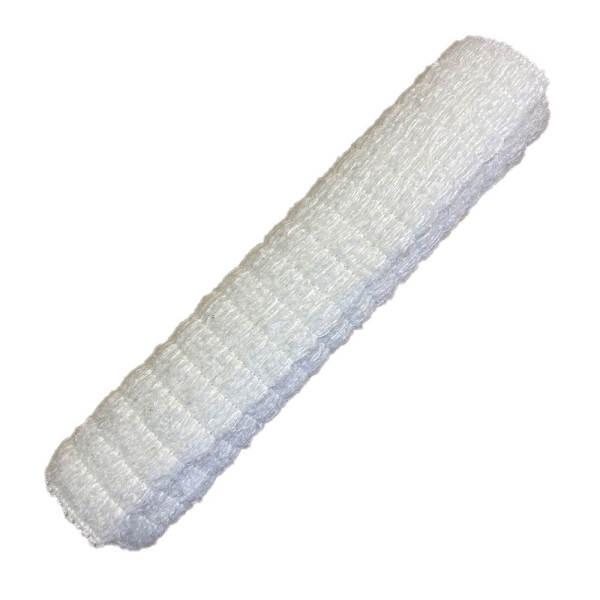
en glasvezel verpakt in geweven glazen gaaszakken.
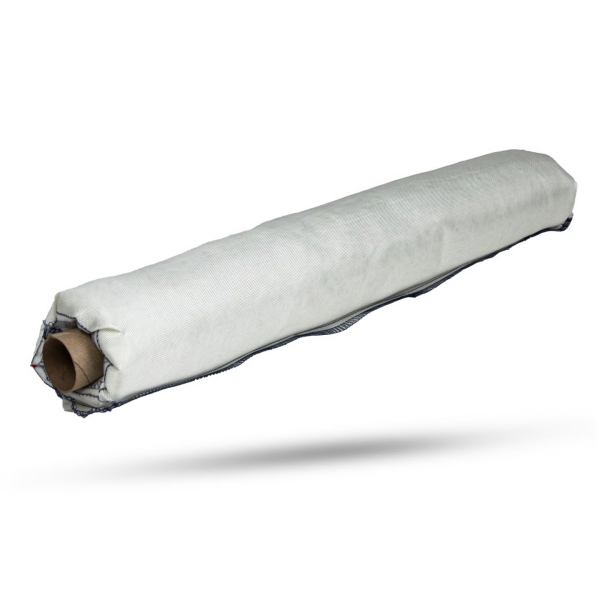
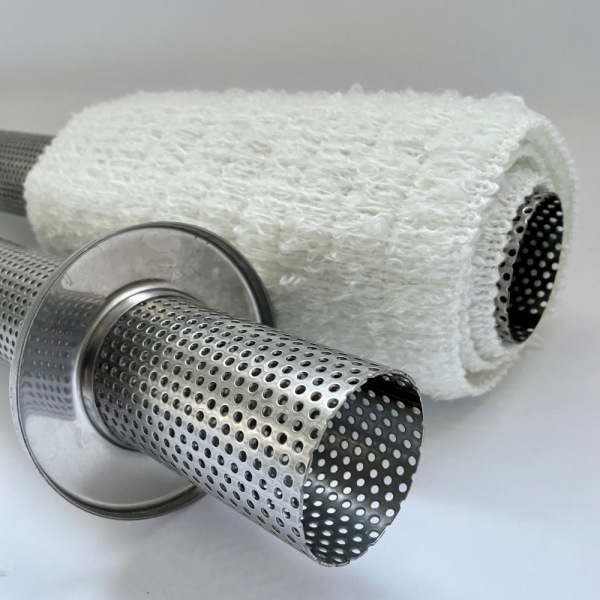
BSTFLEX produceert eenVerpakkingshoes van glasvezel voor uitlaatdemper met geweven glasvezelgaaszakvoor toepassingen waarbij gecontroleerde installatie en vezelretentie de voorkeur hebben boven losse verpakking.
Glasvezelpakkingen worden vaak gekozen voor:
motorfietsdempers,
ATV- en UTV-uitlaatdempers,
uitlaatsystemen voor auto's met verbeterde prestaties,
vervangende geluiddempers,
race-uitlaatsystemen,
en veel OEM-dempers van het absorptietype.
Het voornaamste voordeel is de balans tussen akoestische efficiëntie, gewicht, produceerbaarheid en kosten.
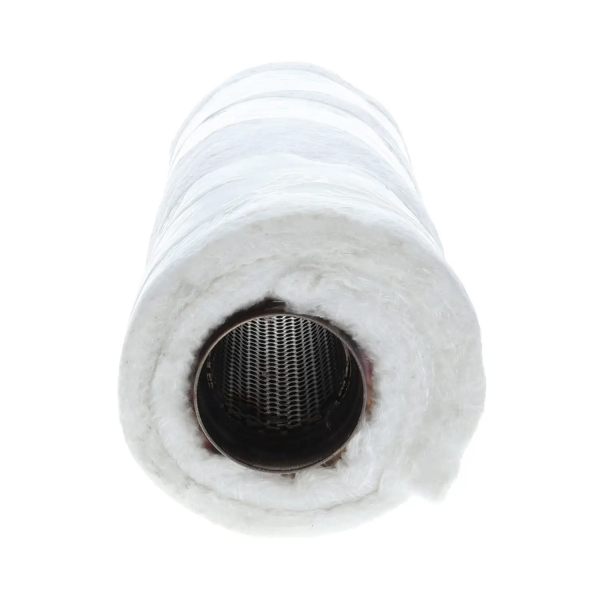
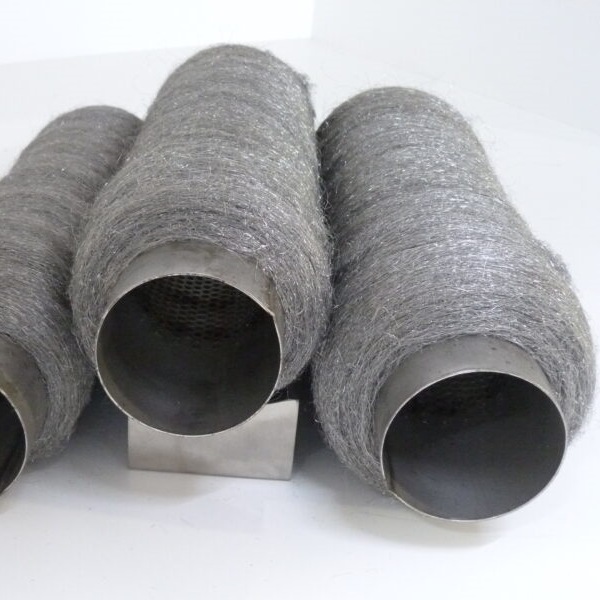
Roestvrijstalen wol heeft een enigszins andere functie.
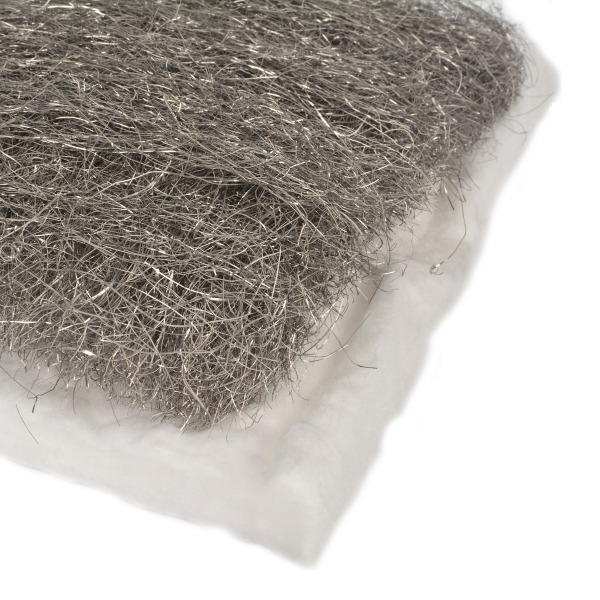
Het kan als pakkingmateriaal worden gebruikt, maar in veel hoogwaardige uitlaatsystemen wordt het direct rond de geperforeerde buis aangebracht als beschermlaag.
De gebruikelijke indeling wordt dan:
Geperforeerde kern → roestvrijstalen wol → glasvezelvulling → geluiddemperbehuizing
De roestvrijstalen laag helpt de zachtere akoestische vezels te beschermen tegen:
zeer hete uitlaatgassen,
hogesnelheidspulsen,
turbulentie rond de perforaties,
blootstelling aan vlammen,
en progressieve vezeluitstroom.
Deze constructie is met name nuttig voor veeleisende uitlaatsystemen in motorfietsen, raceauto's, turbomotoren en motoren met een hoog vermogen.
Om deze reden is het vergelijken van glasvezel en roestvrijstalen wol alsof er maar één materiaal gebruikt kan worden, soms misleidend. In veel geluiddempers vervullen ze namelijk complementaire functies.
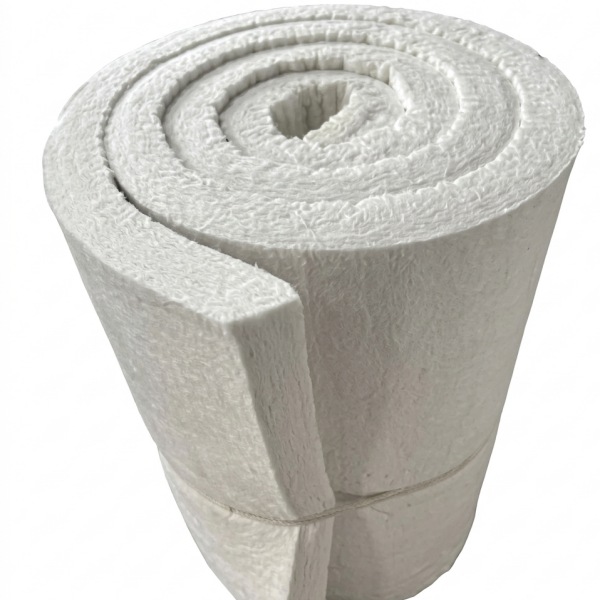
Bij uitzonderlijk hoge uitlaatgastemperaturen kan keramische vezel een oplossing bieden.
Geluiddempervulling van keramische vezels is aantrekkelijk vanwege de hoge temperatuurbestendigheid en de relatief lage warmtegeleidingscoëfficiënt.
Mogelijke toepassingen zijn onder andere:
high-temperature industrial silencers,
heavy-duty engine exhaust systems,
certain generator exhaust assemblies,
thermal-intensive exhaust equipment,
and special mufflers operating beyond the practical range of conventional glass fiber.
However, the highest temperature material is not automatically the best acoustic material.
Density, fiber diameter, resilience, vibration resistance, handling requirements, and long-term fiber stability must also be evaluated.
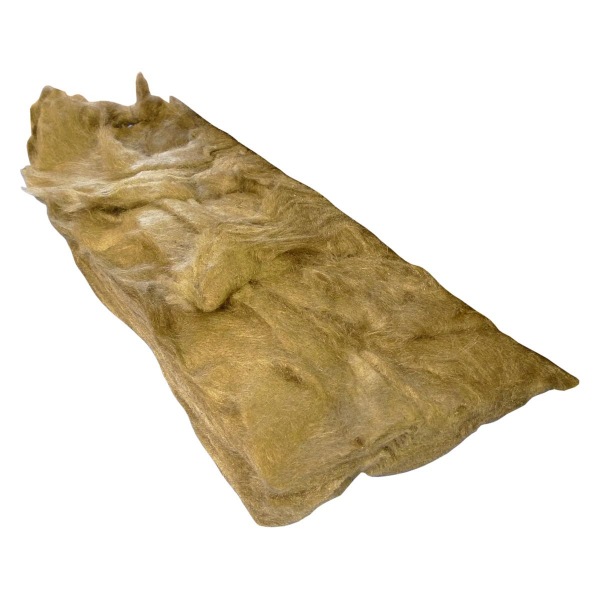
Basalt fiber provides another option between conventional glass fiber and more specialized high-temperature materials.
Produced from volcanic basalt rock, continuous basalt fibers can provide:
good thermal resistance,
mechanical stability,
chemical resistance,
vibration resistance,
and useful acoustic performance.
Basalt muffler packing can therefore be considered for automotive, motorcycle, heavy-duty, or industrial exhaust systems where designers want a mineral-fiber solution with elevated thermal capability.
| Packing Material | Primary Strength | Typical Position | Suitable Applications |
|---|---|---|---|
| Fiberglass | Efficient acoustic absorption | Main packing layer | Motorcycle, automotive, performance exhaust |
| Stainless Steel Wool | Heat and erosion protection | Around perforated core or as metallic packing | Racing, turbo, high gas velocity exhaust |
| Ceramic Fiber | Extreme-temperature capability | Main or supplementary insulation layer | Industrial and severe-temperature silencers |
| Basalt Fiber | Thermal and mechanical durability | Main acoustic packing layer | Heavy-duty, automotive and industrial exhaust |
The correct construction may combine two or more materials rather than using a single fiber throughout the silencer.
Two mufflers using exactly the same fiber can perform differently simply because the material was installed at different densities.
This is one of the most overlooked aspects of exhaust muffler packing.
If the fiber mass is insufficient, several problems can develop:
reduced acoustic absorption,
rapid fiber movement,
localized empty areas,
increased exhaust noise,
accelerated blowout.
The fibers may also redistribute under vibration and exhaust pulsation.
Over-compression creates another set of problems.
When fibrous material is compressed excessively, the void structure needed for acoustic energy dissipation changes.
The result can be:
poorer sound absorption in certain frequency ranges,
increased silencer weight,
difficult assembly,
reduced fiber resilience,
and unnecessary material consumption.
The goal is therefore not to put the maximum possible amount of packing inside the muffler.
The objective is to achieve a controlled and repeatable packing density suitable for the muffler geometry and target acoustic performance.
Muffler packing works in one of the harshest environments on a vehicle.
The material may experience thousands of heating and cooling cycles together with vibration and rapidly fluctuating exhaust pressure.
Several deterioration mechanisms can occur.
High-velocity exhaust gases passing through perforations gradually attack exposed fibers.
This is often called fiber blowout.
Continuous exposure to elevated temperature can reduce fiber resilience and alter the packing structure.
Vibration can cause loose packing to migrate or compact.
The silencer may develop areas with insufficient material even when the total amount of packing originally installed was correct.
Condensation, oil residue, incomplete combustion products, and other deposits can affect the condition of the acoustic fibers.
A theoretically suitable material may still fail prematurely if it is packed unevenly or installed at the wrong density.
Muffler packing deterioration is not always visible from outside the silencer.
Several operating changes can indicate that the material should be inspected.
Common signs include:
A noticeable increase in exhaust volume
The muffler gradually becomes louder because the effective acoustic mass has decreased.
A sharper or metallic exhaust note
When the packing layer becomes thin, sound energy interacts more directly with the metal shell.
Fibers coming from the tailpipe
Visible strands or particles at the outlet may indicate packing migration or blowout.
Hot spots on the muffler casing
Loss or movement of the internal packing can create uneven thermal distribution.
Rattling or internal movement
This can indicate loose material or deterioration of internal components.
Motorcycle silencers place especially high demands on packing material because the available volume is limited while exhaust temperatures and pulse velocity can be high.
For this reason, motorcycle exhaust packing normally needs to combine:
strong acoustic absorption,
low weight,
good thermal stability,
resistance to vibration,
easy repacking,
and controlled fiber retention.
Both two-stroke and four-stroke engines use packed silencers, but their operating environments differ considerably.
Two-stroke exhaust packing can be affected heavily by oil, combustion residue, and frequent repacking cycles.
Four-stroke performance exhausts may expose the material to higher sustained temperatures and aggressive exhaust pulses.
Selecting packing purely by motorcycle type is therefore insufficient. Muffler construction and engine operating conditions should also be considered.
Performance exhaust manufacturers often need to reduce sound without introducing excessive backpressure.
Straight-through absorption mufflers are useful in this situation because the exhaust path remains relatively open.
The acoustic packing surrounding the perforated core becomes a critical component.
Depending on the application, manufacturers may specify:
continuous fiberglass packing,
stainless steel wool core protection,
composite stainless/fiberglass systems,
basalt fiber,
or specialized high-temperature fibers.
For racing exhaust systems, packing retention becomes particularly important because high gas velocities can rapidly damage exposed loose fibers.
Industrial silencers operate under a different set of requirements.
Applications can include:
diesel generators,
gas engines,
compressors,
turbines,
exhaust treatment equipment,
heavy machinery,
power generation systems,
and industrial ventilation or acoustic control systems.
In these installations, designers may prioritize:
continuous operating temperature,
acoustic absorption over a specified frequency range,
long maintenance intervals,
fiber stability,
corrosion resistance,
and repeatable packing density.
Industrial buyers therefore often purchase muffler packing by engineering specification rather than simply selecting a consumer repacking kit.
Manufacturers normally have several ways to introduce fiber into a silencer.
Loose fibers or strands allow considerable flexibility during assembly.
They work well where the muffler geometry varies or packing is performed manually.
The challenge is maintaining consistent density from one muffler to another.
Mats provide more predictable thickness and make material handling easier during production.
They are especially suitable when the silencer has a regular cylindrical geometry.
A measured amount of fiber is enclosed inside a lightweight retaining fabric or mesh.
This allows manufacturers to control fiber mass before installation.
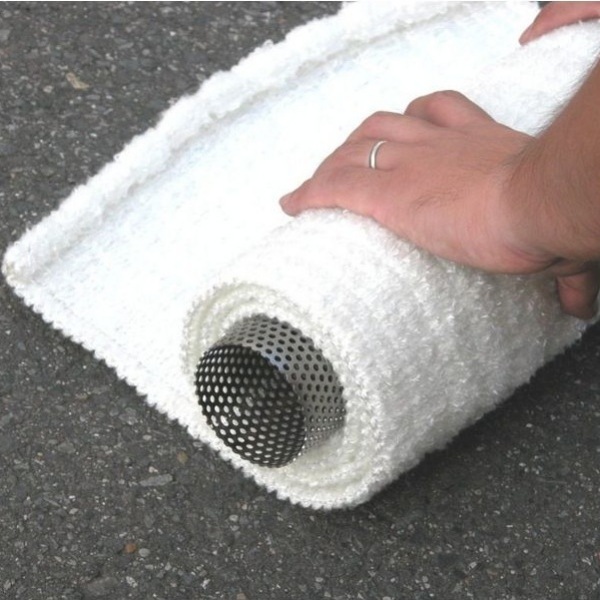
A tubular packing assembly can be fitted around the perforated core, reducing installation time and helping maintain circumferential coverage.
BSTFLEX develops customized packing formats including fiberglass-based assemblies for OEM exhaust production.
A purchase specification should contain more information than simply:
“Fiberglass muffler packing.”
For repeatable production, buyers should consider supplying:
| Specification Item | Why It Matters |
|---|---|
| Fiber material | Determines thermal and mechanical behavior |
| Silencer internal diameter | Defines available packing space |
| Perforated core diameter | Determines required packing thickness |
| Muffler length | Determines fiber quantity |
| Target packing density | Influences acoustic performance |
| Continuous exhaust temperature | Determines material suitability |
| Peak temperature | Identifies short-duration thermal exposure |
| Engine type | Helps evaluate exhaust environment |
| Packing format | Loose fiber, mat, pillow, sock or custom assembly |
| Annual quantity | Determines manufacturing and packaging method |
When these parameters are available, the packing can be engineered around the silencer rather than supplied as a generic bulk fiber.
Manual loose packing creates several variables.
One operator may install more material than another. Distribution around the perforated tube may also vary.
Preformed systems reduce this variability.
A packing sock, bag, pillow, or measured mat can provide:
defined material weight,
more uniform circumferential distribution,
reduced fiber handling,
shorter assembly time,
cleaner production,
improved batch repeatability.
For medium- and high-volume exhaust manufacturing, those manufacturing benefits can be as important as the thermal properties of the fiber itself.
A practical starting point is to identify the dominant failure risk.
Consider fiberglass as the primary acoustic layer.
Consider a stainless steel wool or metallic mesh protection layer before the main fiber packing.
Evaluate ceramic or other elevated-temperature fibers.
Consider materials and packing forms with stronger dimensional stability and controlled retention.
Consider preformed socks, pillows, mats, or custom packing assemblies rather than uncontrolled loose fill.
BSTFLEX manufactures high-temperature thermal and acoustic materials for exhaust systems and can support both replacement packing and OEM silencer production.
Available development options can include:
fiberglass muffler packing,
glass fiber silencer packing,
stainless steel wool packing,
ceramic fiber packing,
basalt-based packing,
loose fiber,
mats,
rolls,
packing bags,
packing pillows,
tubular packing socks,
and customized preformed assemblies.
Sizes, packing weight, fiber combination, retaining construction, and packaging can be developed according to customer drawings, samples, or silencer dimensions.
For applications requiring easier assembly and improved fiber containment, see theFiberglass Muffler Packing Sock with Woven Glass Mesh Bag.
For additional material options, visit theBSTFLEX Muffler Packing category.
There is no universal best material. Fiberglass is widely used because of its acoustic efficiency and weight, stainless steel wool is effective for protecting packing near the perforated core, while ceramic and basalt fibers may be selected where higher temperature capability is required.
Yes. Fiberglass is one of the most common acoustic materials used in absorption-type exhaust silencers because its fibrous structure provides efficient sound absorption while remaining relatively lightweight.
It can be used alone in some designs, but stainless steel wool and fiberglass often perform different functions. Stainless steel wool can protect the inner packing from exhaust erosion, while fiberglass provides the principal acoustic absorption layer.
Packing can escape because of fiber erosion, excessive gas velocity, damaged retaining mesh, incorrect packing density, thermal degradation, or deterioration around the perforated core.
Not necessarily. Excessive compression can reduce the open fiber structure needed for effective acoustic absorption. Packing density should be controlled rather than maximized.
There is no fixed interval for every exhaust system. Replacement frequency depends on exhaust temperature, engine type, riding conditions, packing material, gas velocity, silencer design, and operating hours.
Ja. OEM-verpakkingen kunnen worden geleverd op basis van de kerndiameter, de diameter van de behuizing, de lengte van de geluiddemper, het beoogde verpakkingsgewicht, de materiaalspecificaties, de temperatuurvereisten en de gewenste installatievorm.
De zichtbare demperbehuizing krijgt vaak de meeste aandacht bij het ontwerpen van een uitlaat, maar het materiaal dat zich tussen die behuizing en de geperforeerde kern bevindt, bepaalt voor een groot deel het akoestische gedrag van de demper.
Een correct ontworpenuitlaatdemper dekmateriaalHet is niet de bedoeling dat ze alleen maar bestand zijn tegen hitte.
Het is essentieel om de juiste balans te bewaren tussen vezelstructuur, dichtheid, akoestische absorptie, erosiebestendigheid en installatieconsistentie.
Voor standaard uitlaatdempers voor motorfietsen en auto's blijft glasvezel een van de meest veelzijdige opties. Voor veeleisende uitlaatsystemen kunnen roestvrijstalen wol, keramische vezels, basaltvezels of meerlaagse combinaties de levensduur verlengen.
Voor OEM-uitlaatfabrikanten is de volgende stap niet simpelweg het kiezen van een vezel.
Het definieert de juisteuitlaatdemper pakkingsysteemvoor de geometrie van de geluiddemper, de uitlaatgastemperatuur, het akoestische doel en de productiemethode.
BSTFLEX kan dempingsmaterialen voor uitlaatdempers produceren en aanpassen voor motorfietsen, auto's, racewagens, generatoren, schepen en industriële uitlaatsystemen.
Neem contact op met BSTFLEX en deel uw specificaties voor de geluiddemper: afmetingen, bedrijfstemperatuur, gewenste verpakkingsvorm en jaarlijkse hoeveelheid. Wij zorgen voor de materiaalkeuze en de ontwikkeling van een proefmodel.

No.10, Chuangxin North Road, Nanshan Park, Ningguo Economic and Technological Development Zone, Ningguo City, Anhui Province, China
tel/Whatsapp : 0086-15856303740
e-mail : sales@bstbraidedsleeve.com
Skype : vanesa-cheng