waar bent u naar op zoek?
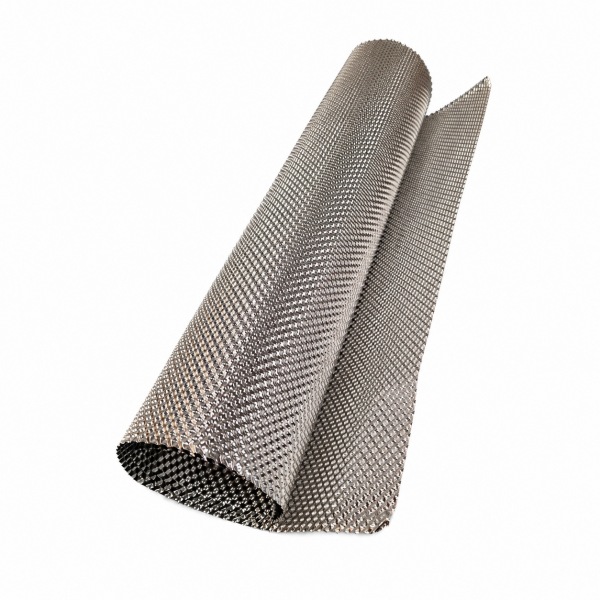
Specifying an aluminum automotive heat shield by writing only “aluminum sheet” on a drawing leaves an important engineering decision unresolved. Aluminum alloy grade affects how the sheet behaves during embossing, stamping and forming, how much mechanical load it can tolerate, and how well the finished shield survives its operating environment.
Four grades frequently considered for formed aluminum sheet applications are 1050, 1100, 3003 and 5052. They belong to three different alloy families and should not be treated as interchangeable simply because they are all aluminum.
For heat shield development, the practical question is not which alloy is universally best. It is which combination of alloy, temper, thickness and formed geometry fits the thermal zone and manufacturing process of the finished component.
BSTFLEX supplies embossed aluminum heat shield material for automotive exhaust, engine compartment and underbody thermal protection projects. Customers can provide an existing specification, drawing or application information for evaluation.
| Alloy | Alloy Family | General Character | Forming Capability | Relative Strength | Typical Heat Shield Selection Reason |
|---|---|---|---|---|---|
| 1050 | 1xxx high-purity aluminum | Very high aluminum content | Excellent | Low | Deep forming, lightweight shielding and applications where high strength is not the priority |
| 1100 | 1xxx commercially pure aluminum | Highly workable general-purpose sheet | Excellent | Low | Formed and embossed shields requiring easy fabrication |
| 3003 | 3xxx aluminum-manganese | Balanced strength and formability | Very good | Moderate | Automotive shields requiring greater stiffness without moving to a high-strength alloy |
| 5052 | 5xxx aluminum-magnesium | Higher-strength corrosion-resistant sheet | Good | Higher | More mechanically demanding or corrosive vehicle environments |
The table describes general alloy behavior. Actual mechanical properties depend strongly on temper, sheet thickness and processing history. An O-temper sheet and an H-temper sheet of the same alloy can behave differently during stamping and in the finished part.
A rigid automotive heat shield has two jobs to perform simultaneously. It must contribute to thermal management while also behaving as a manufactured metal component.
This means the material may need to pass through several operations before it reaches the vehicle:
An alloy that forms easily may be attractive for complex geometries but offer less mechanical strength. Another alloy may provide considerably more strength but require different tooling, bend radii or forming conditions.
For that reason, aluminum heat shield material should be specified as part of the component design rather than selected only from a generic temperature requirement.
1050 belongs to the 1xxx family of high-purity aluminum. It contains a minimum of approximately 99.5 percent aluminum and is known for excellent workability, corrosion resistance and high thermal and electrical conductivity.
From a manufacturing perspective, its most useful feature for heat shields is its ability to be formed readily. This makes 1050 worth considering where a thin aluminum sheet needs to be embossed, bent or drawn into a relatively complex shape and high structural strength is not the primary design requirement.
The principal tradeoff is mechanical strength. High-purity aluminum alloys are not selected when the heat shield must carry substantial mechanical loading or resist severe deformation.
If a component requires greater stiffness or durability, the designer can evaluate a different temper, change the embossed geometry, modify the component section or move to an alloy such as 3003 or 5052.
1100 is another commercially pure 1xxx-series aluminum and contains at least about 99 percent aluminum. Like 1050, it provides excellent formability and is widely available in sheet products.
For heat shield manufacturing, 1100 is attractive when the part needs extensive forming and does not require the mechanical strength associated with more heavily alloyed grades.
1050 and 1100 therefore occupy similar territory in the material-selection process. The decision between them is often influenced by customer specifications, regional availability, required standard, existing tooling and supply-chain requirements rather than by a dramatic difference in heat shield function.
For many automotive heat shield projects, 1050 and 1100 can occupy a similar design space because both are high-aluminum-content 1xxx alloys with strong forming characteristics.
1050 has the higher minimum aluminum purity, while 1100 contains slightly more alloying additions. The practical significance depends on the finished component specification.
A buyer should therefore avoid changing from 1050 to 1100 or from 1100 to 1050 solely because the two grades appear similar on paper. If the part already has an approved drawing or OEM material specification, the specified grade should be maintained unless an alternative has been technically validated.
3003 moves away from commercially pure aluminum and into the aluminum-manganese 3xxx family. Manganese is the principal alloying addition and gives 3003 greater strength than 1xxx-series grades while retaining useful formability and corrosion resistance.
This balance makes 3003 particularly interesting for automotive heat shields.
A formed shield often needs more than easy stamping. It may also need enough rigidity to hold its geometry across a wide surface, resist handling damage and remain stable after installation. 3003 offers a practical middle ground between highly formable pure aluminum and the stronger 5xxx family.
Automotive material selection frequently involves compromises.
A very soft and highly formable sheet may be easy to stamp but require additional geometry to obtain the desired component rigidity. A stronger alloy can improve robustness but make demanding forming operations less forgiving.
3003 is useful because it provides more mechanical strength than the commercially pure 1xxx grades while remaining suitable for many conventional sheet-forming operations.
For OEM buyers who have not yet fixed the alloy, 3003 is therefore one of the grades worth evaluating when the application requires both forming flexibility and moderate structural performance.
5052 belongs to the aluminum-magnesium 5xxx series. Compared with 1050, 1100 and 3003, it moves the material choice toward greater mechanical strength and demanding-service durability.
The magnesium addition is responsible for much of this change in performance. 5052 is widely valued for its corrosion resistance as well as its strength among commonly used non-heat-treatable aluminum sheet alloys.
For automotive heat shields, these properties can be useful where a panel is exposed to a harsher mechanical or environmental operating condition.
No. Higher strength does not automatically mean better heat shield material.
If a very complex component requires extensive deep drawing, a softer high-purity alloy may be easier to manufacture. If the shield is large but lightly loaded, additional strength may provide little benefit while increasing material cost or forming difficulty.
The correct question is whether the finished component actually needs the additional strength and corrosion performance provided by 5052.
This comparison is largely a choice between maximum forming flexibility and additional mechanical strength.
1050 is attractive where high purity and easy deformation are desirable. 3003 adds manganese and provides a stronger sheet while retaining good manufacturing characteristics.
For a relatively simple radiant barrier with deep forming requirements, 1050 may be sufficient. For a larger stamped shield requiring more inherent panel strength, 3003 may offer a more suitable balance.
The difference becomes more pronounced when comparing 3003 with 5052.
3003 is a general-purpose aluminum-manganese alloy with moderate strength and good formability. 5052 is a stronger aluminum-magnesium alloy with particularly good corrosion resistance.
A typical selection logic is:
This is not a substitute for engineering validation. The temper, thickness and finished part geometry remain critical.
One of the most important details in an aluminum heat shield RFQ is frequently overlooked: temper.
Common aluminum sheet conditions may include designations such as:
These designations describe how the aluminum has been processed and influence mechanical properties and forming behavior.
For example, a soft annealed condition may be selected for demanding forming operations, while a work-hardened condition can provide greater finished-sheet strength.
This is why a useful specification should state more than:
“3003 aluminum, 0.5 mm.”
A complete requirement should define the alloy and temper together whenever the component has already been engineered around a specific material condition.
The base alloy is not the only source of panel stiffness.
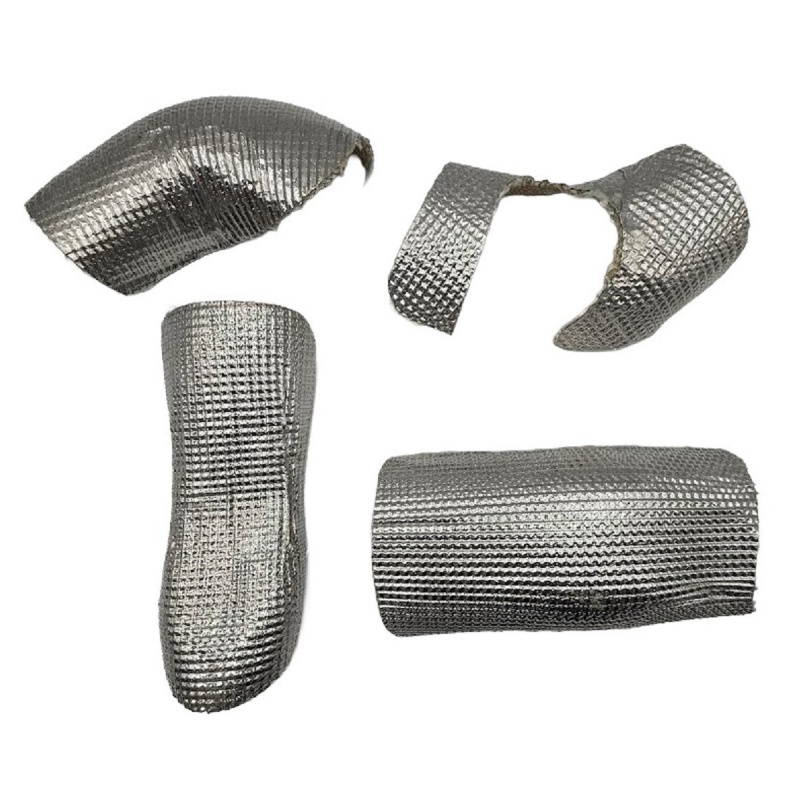
BSTFLEX embossed aluminum thermal barrier sheet uses formed surface geometry to increase the structural stability of thin aluminum.
Consequently, engineers should consider three variables together:
| Variable | What It Influences |
|---|---|
| Alloy | Base strength, formability, corrosion behavior and manufacturing response |
| Temper | Hardness, strength and forming capability |
| Embossing geometry | Panel stiffness, dimensional stability and response to vibration |
Changing one variable can affect the requirement for the others. A heat shield therefore should not be optimized by alloy number alone.
For engine compartment radiant barriers, 1050, 1100 and 3003 can all be candidates depending on the component geometry and stiffness requirement.
A deeply formed part may benefit from a highly formable grade. A broad panel requiring greater shape stability may justify 3003 or a work-hardened temper.
5052 can be evaluated when mechanical durability or corrosion exposure is more demanding.
Underbody shields face more than heat. They can also encounter water, road contaminants, vibration and debris.
For this reason, engineers commonly place greater emphasis on corrosion resistance and mechanical stability than they might for a protected engine-compartment barrier.
3003 can offer a useful strength-to-formability balance for many underbody designs. 5052 becomes attractive when greater strength and environmental durability are priorities.
Where the thermal zone exceeds the practical limits of the selected aluminum construction, the solution should not simply be to choose a stronger aluminum alloy. The engineer should instead evaluate shield spacing, multiple layers or another metal such as stainless steel heat shield material.
Whether aluminum is suitable near an exhaust manifold depends on the actual thermal environment, distance from the heat source, airflow and shield architecture.
Alloy grade alone cannot answer this question.
A stronger aluminum such as 5052 does not automatically make the material suitable for a thermal condition that exceeds what an aluminum shield assembly can tolerate. Mechanical strength and thermal suitability are different engineering issues.
For severe exhaust-side locations, stainless steel or, in extreme systems, Inconel 625 heat shield material may be more appropriate.
Melting point is sometimes used in online heat shield comparisons as if it were an operating-temperature rating. For an engineered vehicle component, that approach is incomplete.
A metal does not have to melt before its mechanical properties, oxidation behavior or dimensional stability become unacceptable for the application.
Automotive heat shield selection should instead consider:
This is why an alloy comparison based only on melting temperature can lead to a poor material decision.
Increasing sheet thickness adds mechanical strength and stiffness, but it also increases part weight and raw-material consumption.
An automotive heat shield can achieve structural stability through a combination of alloy selection, temper, embossing and formed component geometry.
For this reason, the minimum practical thickness should be established from the completed part design and validation requirements rather than copied from an unrelated heat shield.
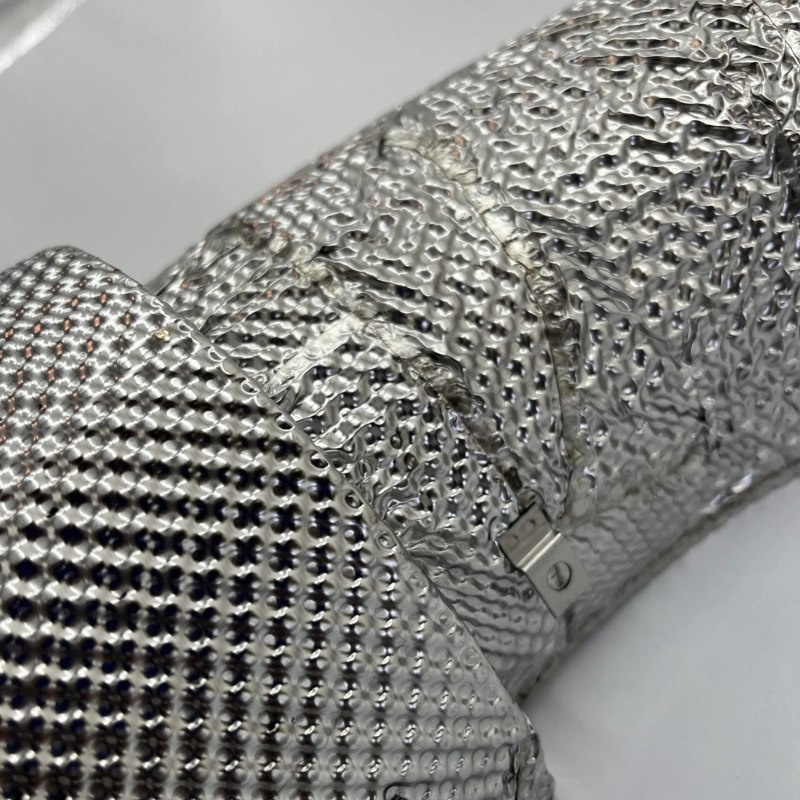
For a new OEM or replacement project, provide as much of the following information as possible:
| RFQ Item | Example Information |
|---|---|
| Application | Engine bay, exhaust tunnel, catalytic converter, muffler or underbody |
| Alloy | 1050, 1100, 3003, 5052 or supplier recommendation |
| Temper | O, H14, H24, H32 or drawing requirement |
| Thickness | Specified nominal thickness |
| Surface | Flat or embossed |
| Embossing Pattern | Existing pattern, drawing, sample or required design |
| Supply Form | Sheet, coil, blank or finished part |
| Dimensions | Width, length and component dimensions |
| Further Processing | Stamping, bending, drawing, punching or trimming |
| Quantity | Prototype requirement and annual production volume |
Sometimes, but substitution should not be made from alloy names alone.
A change from 1050 to 1100 may appear relatively minor, while a change from 1050 to 5052 represents a much larger shift in strength and forming characteristics. Even when two materials can perform the same thermal function, the stamping process may need different parameters.
Before approving a substitution, review:
Not every buyer begins with a completed material specification. For prototype and custom heat shield projects, the starting point may be an existing part, a drawing or simply an installation problem.
In that situation, provide:
This information allows the material choice to be evaluated together with thickness and embossing construction.
BSTFLEX manufactures embossed aluminum thermal barrier material for automotive and industrial thermal management applications.
Projects can be developed according to customer drawings, samples and material specifications, with variables such as alloy, temper, thickness, sheet dimensions and embossed construction evaluated according to the finished application.
For thermal zones requiring a different metal family, customers can also evaluate embossed stainless steel heat shield material or Alloy 625 Inconel heat shield material.
1050, 1100, 3003 and 5052 are among the aluminum grades that can be considered for automotive heat shield sheet. The correct alloy depends on the required forming capability, mechanical strength, corrosion resistance, component geometry and operating environment.
1050 can be suitable for lightweight formed thermal barriers where excellent formability and high aluminum purity are important and the component does not require high mechanical strength.
1100 is a commercially pure 1xxx-series aluminum with excellent formability. 3003 contains manganese and offers greater mechanical strength while retaining good forming capability. This can make 3003 useful for shields requiring more rigidity.
3003 provides a useful balance of formability and moderate strength. 5052 offers higher strength and strong corrosion resistance. The better material depends on the finished component and environment rather than on alloy strength alone.
5052 can be considered for aluminum heat shield applications requiring greater mechanical durability or corrosion resistance. Its suitability for a particular exhaust location still depends on the thermal exposure, air gap, shield architecture and validation requirements.
Not necessarily. Greater mechanical strength does not by itself establish a higher allowable service temperature. Thermal exposure, alloy behavior at temperature, component geometry and shield spacing must be evaluated separately.
Temper affects sheet hardness, strength and formability. Two sheets made from the same aluminum alloy but supplied in different tempers can behave differently during embossing, bending and deep drawing.
Yes. Projects can be developed according to drawings, samples or application requirements. Buyers should provide the preferred alloy and temper when specified, together with thickness, dimensions, embossing requirements and expected production quantity.
The four alloys represent different priorities rather than a simple progression from inferior to superior.
1050 is a strong candidate when high purity and excellent forming capability are priorities.
1100 provides similar advantages as a widely used commercially pure aluminum sheet.
3003 is useful when the heat shield needs a better balance between formability and mechanical strength.
5052 moves toward higher strength and demanding environmental durability.
The final specification should combine alloy, temper, thickness, embossing geometry and component design. For OEM projects, send BSTFLEX your drawing, sample, operating environment and quantity so the aluminum heat shield construction can be evaluated as a complete component rather than as a sheet grade in isolation.

No.10, Chuangxin North Road, Nanshan Park, Ningguo Economic and Technological Development Zone, Ningguo City, Anhui Province, China
tel/Whatsapp : 0086-15856303740
e-mail : sales@bstbraidedsleeve.com
Skype : vanesa-cheng