waar bent u naar op zoek?

When sourcing a turbo safety blanket, the material specification is only one part of the decision. Buyers also need to understand the reinforcement layout, seam construction, attachment points, compressor housing coverage and evidence supporting the intended containment performance. Two blankets that look similar on the outside may have different internal constructions and may not be suitable for the same application.
For racing parts brands, turbocharger suppliers, motorsport fabricators and OEM buyers, reviewing these details before ordering helps reduce specification gaps and avoid treating an unverified material substitution as an equivalent product.
BSTFLEX Turbo Safety Blanket is intended for compressor-side containment applications. Its construction and project requirements should be evaluated against the actual turbocharger configuration, installation conditions and any applicable competition or testing requirements.
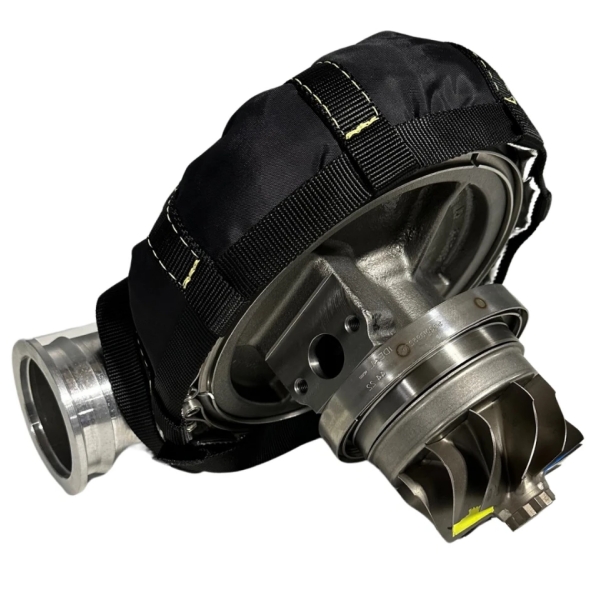
A turbo safety blanket is not simply a heat-resistant cover. Its purpose is to help contain fragments in the event of a catastrophic compressor-side failure. Consequently, the performance of the complete assembly matters more than the temperature rating or appearance of a single fabric layer.
When assessing a turbo containment blanket, buyers should establish how the outer cover, reinforcement, seams, fastening system and overall geometry work together. Material descriptions alone cannot demonstrate that a finished blanket provides a particular level of fragment containment.
A useful supplier specification should identify the construction being offered, the intended application, the relevant limitations and any available test documentation. If a project requires a particular competition specification, that requirement must be confirmed for the exact product configuration.
The outer cover forms the visible surface of the blanket and protects the internal assembly from the surrounding installation environment. Its suitability depends on the specified materials, construction, exposure conditions and the requirements of the complete product.
When reviewing an outer cover, ask the manufacturer:
A generic description such as high-temperature fabric is not a complete material specification. Buyers should request information appropriate to their application rather than assume that all high-temperature textiles provide the same properties.
The reinforcement and internal construction are important parts of a turbo safety blanket. A material that withstands heat exposure is not automatically suitable for containing fragments. Containment capability must be assessed at the assembly level, including the material arrangement, joints, closures and attachment system.
Before placing an order, ask for clarification on the following points:
Do not infer containment performance from fabric weight, layer count or thickness alone. Those details can help define a product, but they do not independently establish its ability to contain fragments during a failure event.
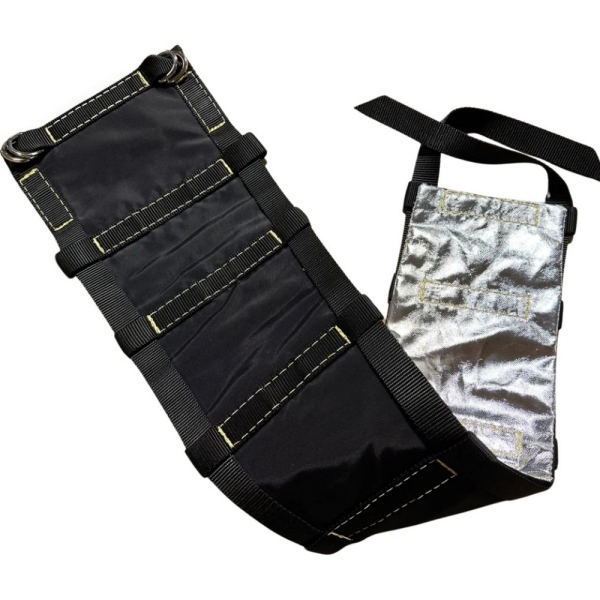
Seams and edges connect different parts of the blanket and help maintain the intended shape. Their design must be considered alongside the materials and fastening system, particularly where the assembly follows a curved compressor housing.
Ask the supplier to identify the seam construction, stitching materials, reinforced attachment areas and inspection criteria. For repeat orders, the approved drawing and manufacturing specification should make it clear which construction details must remain consistent.
For a custom turbo shatter blanket, the pattern should account for the actual housing profile and the positions of the inlet, outlet, clamps and nearby components. A visually similar pattern should not be accepted as equivalent without checking fitment and the relevant technical requirements.
The fastening arrangement is part of the complete blanket design. Straps, buckles, reinforced tabs or other retention components must suit the specified assembly and installation method.
During supplier evaluation, confirm:
Do not substitute cable ties, random wire or unapproved clamps for the specified retention system. Likewise, a change to the fastening method should not be assumed acceptable simply because the blanket remains physically attached to the housing.
For installation-specific considerations, refer to the Turbo Safety Blanket for Racing: Compressor Containment, Fitment and Custom Supply article.
Material selection cannot be separated from the geometry of the compressor housing. The finished blanket must fit the intended housing and retain its specified coverage without unacceptable interference with adjacent components.
When developing a custom pattern, provide:
These details help the manufacturer assess pattern feasibility and identify potential interference before production. They do not, by themselves, prove containment performance or competition compliance.
For the product itself, see the BSTFLEX Turbo Safety Blanket product page.
For a product intended to contain fragments, buyers should evaluate the available evidence rather than rely only on general material descriptions or marketing claims.
Depending on the project, request information covering:
If a racing organization specifies a particular standard, verify the applicable requirements directly with that organization and confirm that the supplied product has the necessary supporting evidence. Do not assume that a general-purpose turbo safety blanket is automatically approved for every racing class.
Any test claim should be traceable to the product configuration, materials and construction it actually covers. A test report for a different design should not be treated as proof that an untested variation has equivalent performance.
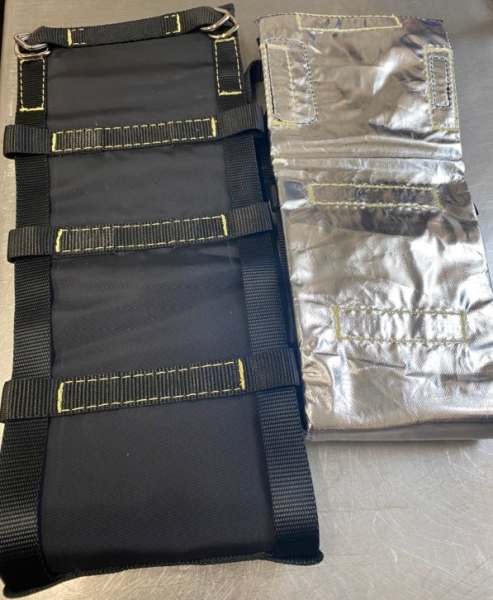
For distributors and private-label brands, a material substitution can affect more than the appearance of a finished blanket. Changes to the outer cover, reinforcement, stitching, closures or attachment points may alter the construction and may invalidate assumptions based on an earlier design or test report.
Before approving a substitute material, ask the manufacturer to document:
For repeat OEM orders, retain the approved drawing, bill of materials, revision history and inspection requirements. Any change affecting the defined construction should be reviewed and approved before production proceeds.
This approach is particularly useful for brands sourcing a custom turbo safety blanket manufacturer rather than purchasing an unmodified generic accessory.
A detailed request for quotation helps the manufacturer understand the application and identify which technical details must be confirmed before pricing.
| RFQ Requirement | Information to Request or Supply |
|---|---|
| Application | Vehicle type, intended use and operating environment |
| Housing fitment | Turbocharger identification, measurements, drawings and photographs |
| Material construction | Outer cover, reinforcement, stitching and retention specifications |
| Performance evidence | Available test documentation and any required competition specification |
| Quality requirements | Inspection criteria, identification and revision control |
| Commercial details | Sample quantity, estimated production volume, packaging and branding |
For a custom project, provide the intended quantity and whether the requirement is for a prototype, a production order or an ongoing OEM program. This helps establish the appropriate development and approval process.
These two products should be specified separately because their primary functions differ.
BSTFLEX provides a separate Turbo Heat Shield Blanket product range for buyers evaluating turbine-side insulation. A heat blanket should not be treated as a substitute for a compressor containment product.
If your project requires a custom compressor housing pattern, OEM supply or a private-label program, send BSTFLEX the available drawings, dimensions, photographs and technical requirements.
Include the target application, estimated order quantity, required material documentation and any competition-specific requirements. These details help establish the proposed construction and identify the evidence needed before product approval.
View BSTFLEX Turbo Safety Blanket
Contact BSTFLEX for a Custom or OEM Inquiry
Materials vary by product design. Buyers should request the exact outer cover, reinforcement, stitching and retention specifications for the proposed assembly rather than assume all turbo safety blankets use the same construction.
No. Temperature resistance alone does not establish containment performance. The complete assembly, including reinforcement, seams, fastening and geometry, must be evaluated against the intended requirements.
Do not assume a substitute is equivalent. The proposed change should be reviewed against the original construction, technical requirements and any relevant test or approval documentation.
Depending on the project, request material specifications, product identification, available test reports, applicable approval documents, inspection criteria and revision records. Confirm that the evidence applies to the exact construction being supplied.
BSTFLEX accepts inquiries for turbo safety blanket projects. Provide compressor housing dimensions, photographs or drawings, intended application and required documentation so the proposed construction and manufacturing feasibility can be reviewed.

No.10, Chuangxin North Road, Nanshan Park, Ningguo Economic and Technological Development Zone, Ningguo City, Anhui Province, China
tel/Whatsapp : 0086-15856303740
e-mail : sales@bstbraidedsleeve.com
Skype : vanesa-cheng