waar bent u naar op zoek?
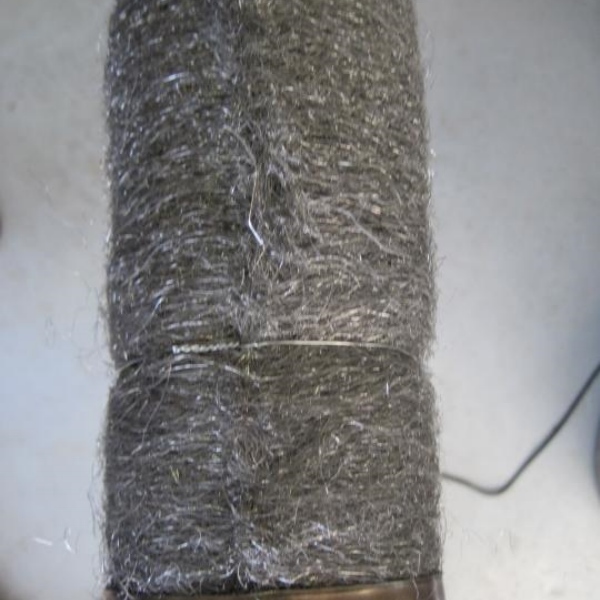
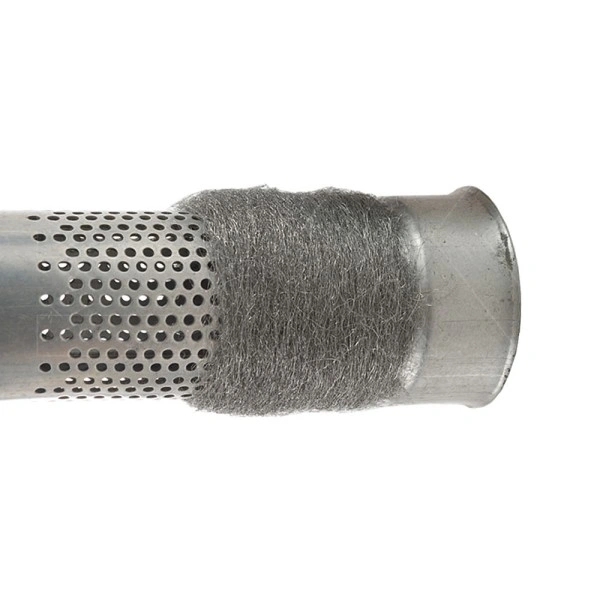
Stainless steel wool muffler packing can be supplied as roll material or formed into a core wrap for an exhaust silencer. A stainless steel wool core wrap provides a porous metallic-fiber layer around the perforated tube, while a retaining screen provides an open wire structure for packing containment. The two may be combined, but they are not interchangeable.
When specifying stainless wool muffler packing, distinguish the material being purchased from the finished assembly. Roll material requires preparation to the approved dimensions and quantity; a finished muffler core sleeve should match the tube diameter, covered length and required layer arrangement.
For an exhaust manufacturer, the useful question is where protection or containment is needed: beside the perforated core, around the packing assembly, or at both locations. Start with the silencer cross-section and the reason for adding the component, rather than selecting whichever product is described as stainless steel.
BSTFLEX offers a Steel Wool Muffler Core Sleeve and a separate Stainless Steel Exhaust Screen for Muffler Packing Retention. This comparison explains how to specify their different roles without treating either as a universal replacement for the other.
| Design Question | Stainless Steel Wool Core Wrap | Packing Retaining Screen |
|---|---|---|
| What forms the working layer? | A three-dimensional metallic-fiber layer, sometimes combined with wire cloth or mesh. | An open network of wire, supplied as a sheet or a formed retaining component. |
| What is the main selection objective? | Provide a core-side layer that can help protect surrounding acoustic fiber from gas erosion. | Contain packing and support the intended assembly shape and placement. |
| Where should the drawing place it? | Around the outside of the perforated core, as specified for the silencer. | At the defined containment interface; the BSTFLEX screen is intended to enclose packing. |
| Which dimensions need particular attention? | Core fit, coverage length, installed thickness and seam or overlap. | Finished coverage, wire construction, opening geometry, edges and overlap. |
| Does it replace the main acoustic filling? | Not automatically. A core-protection component is not a complete packing specification. | No. A packing retainer does not replace the fiber it is intended to contain. |
| Can both be present? | Yes, when the design calls for core protection and separate containment. | Yes, but check whether the selected core wrap already provides the required supporting mesh. |
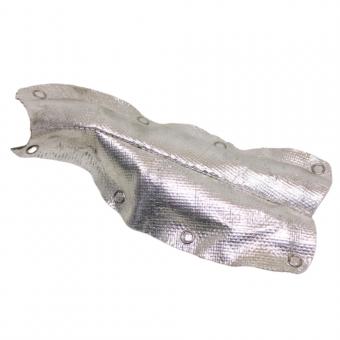
The BSTFLEX core sleeve combines stainless steel wool with 304 stainless steel woven wire cloth. Its description therefore refers to a composite component, not simply loose wool wound around a tube.
The separate BSTFLEX retaining screen is described as a two-layer interlaced stainless wire sheet with two crimped sides. That wire-sheet construction should not be confused with the metallic-fiber layer in the core sleeve.
On an OEM drawing, identify the complete core-wrap assembly and show which layers are included in its part number. A note saying only "add stainless mesh" leaves room for either omitting an intended layer or purchasing it twice.
Also identify the alloy of each constituent separately. A 304 wire-cloth specification does not, by itself, identify the alloy used for the wool.
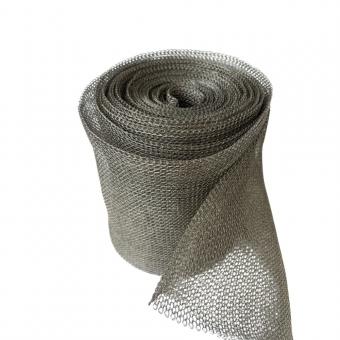
For in-house cutting and wrapping, the BSTFLEX stainless steel wool muffler packing reel provides a roll-format product option. Specify the required width, material quantity and preparation method rather than comparing rolls by outside size alone.
For repeat assembly, review a stainless steel wool muffler core sleeve with its supporting wire cloth. Define the finished fit, wool quantity and installed thickness on the drawing. Purchasing a prepared component changes the supply format; it does not remove the need to approve the alloy and assembly.
When ordering stainless steel wool exhaust packing or stainless steel wire wool for silencer production, identify the metallic-fiber specification separately from any woven or knitted retaining layer. A request for steel wool muffler packing should state the required stainless alloy rather than leaving the material grade open to interpretation.
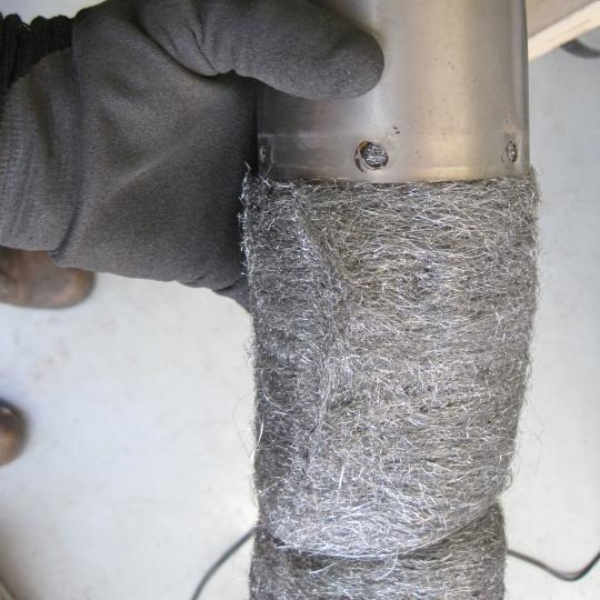
When inspection shows damage concentrated at the core-facing surface, review the existing inner layer and its coverage. Stainless steel wool tubes and wraps are used in silencer designs to reduce gas erosion of surrounding glass or basalt packing.
For that problem, evaluate a muffler core wrap as a protective layer rather than assuming an outer retaining screen will provide the same treatment at the perforations. Check the core condition, uncovered areas, joints and fastening arrangement before assigning the cause to the fiber alone.
When the difficulty is keeping the packing together while inserting it into the shell, review a muffler packing screen or another approved containment method. The first questions are whether the retainer covers the intended area and whether its edges can pass through the assembly without snagging.
Check the insertion route, shell clearance and end closure on a sample. A core-side wool layer should not be expected to solve an unrelated handling problem at the outside of the packing.
Review the location of the opening, retainer overlap and end arrangement. Adding more wool around the middle of the core is not a demonstrated solution to a gap elsewhere in the assembly.
These inspection patterns are starting points, not a diagnosis. Include material condition, operating history and photographs in the review. Neither a screen nor a core wrap should be used to justify retaining a fiber grade that has not been approved for the operating conditions.
A design may use a wool-based layer around the perforated tube and a separate mesh enclosure around the acoustic packing. In that arrangement, the inner component addresses core-side exposure while the outer component supports containment. Metallic wool can also be supplied with its own supporting mesh.
Adding both is therefore a design decision, not a default upgrade. Check the bill of materials before ordering an additional screen. Ask whether it performs a separate job, duplicates an existing layer or changes the finished assembly dimensions.
For replacement work, use the approved silencer construction as the starting point. For a revised OEM design, evaluate the proposed combination in the complete muffler before releasing it for repeat production.
For the wool layer, request the alloy, fiber grade or cross-section, material mass, coverage and installed thickness. State how thickness is measured, since a relaxed wool layer and an installed compressed layer are different conditions.
For the screen, request the alloy, wire diameter, construction, opening dimensions, layer count and edge finish. Where relevant, agree how open area is defined and measured. Wire diameter alone does not describe the openings, and "two-layer" alone does not specify how those layers are arranged.
Do not substitute woven cloth, knitted mesh and other interlaced wire constructions solely because their overall sheet dimensions match. Record the construction or an approved sample reference in the purchase specification.
For thermal selection, provide continuous and peak temperatures with the measurement location and exposure duration. Ask for the proposed alloy and component to be reviewed against those conditions rather than assigning one temperature limit to every stainless steel product. Our stainless steel wool muffler packing guide discusses the wider material-selection considerations.
Account for the installed core wrap before setting the dimensions of the surrounding packing. For a circular core with a uniform layer:
Outside diameter after wrapping = core outside diameter + 2 × installed wrap thickness.
As a geometry example only, a 50 mm core with a 2 mm installed layer has a nominal wrapped diameter of 54 mm, not 52 mm. These figures illustrate the calculation; they are not a recommended packing specification.
Use the wrapped envelope when checking the space assigned to the next layer. Include local overlap, supporting cloth, fasteners and any outer retainer in the actual fit review. For oval or irregular assemblies, work from the drawing rather than applying the circular example.
If the available fiber volume changes, review the approved filling quantity. Adding metal while forcing the original fiber charge into a smaller space changes the average installed fiber density. Do not assume that the previous packing specification remains valid without checking it.
Use a trial assembly to check coverage, seams, edge position, fasteners and closure. Inspect the core and shell for burrs or other features that could damage the components. Keep the intended core passage, inlet and outlet geometry unobstructed.
Then evaluate the assembled silencer under the agreed operating conditions. Record packing distribution and component condition after the trial, and compare sound using a consistent measurement method. Include pressure-loss or backpressure checks where the design review requires them.
A retention component should not be accepted as "acoustically neutral" merely because it fits. Nor does fitting stainless steel establish a particular noise reduction or a guaranteed multiple of packing life. Approve those results against evidence from the actual assembly.
| RFQ Information | What to Define |
|---|---|
| Required function | Core-side protection, packing enclosure, assembly support or a combination. |
| Drawing and dimensions | Core OD, perforated length, shell internal dimensions, layer positions and available clearances. |
| Material identification | Separate alloy requirements for wool, wire cloth, screen and fasteners; existing specifications or sample references. |
| Component construction | Wool mass and installed thickness, screen wire and opening geometry, overlap, edge details and fixing method. |
| Surrounding acoustic packing | Fiber specification, approved filling quantity and the space assigned to that fiber. |
| Service and validation | Temperature information, duty cycle, known failure observations and sample acceptance requirements. |
| Supply requirement | Prototype quantity, recurring demand, finished-component or sheet supply, identification and packaging. |
BSTFLEX supports drawing- and sample-based development through its OEM muffler packing manufacturing service. State whether the project is a like-for-like replacement or a proposed construction change so that the sample review has a defined objective.
Both descriptions may refer to the same metallic-fiber material, but neither defines the alloy, fiber construction or supplied form. Confirm whether the quotation covers bulk wool, roll material or a finished core wrap. A retaining screen is a different wire structure, even when supplied with the wool as one assembly.
No. A wool-based core wrap contains a metallic-fiber layer; exhaust mesh describes a wire structure. Some finished core wraps combine both. Compare the component drawing and material list rather than the names alone.
No. The screen described here is a packing retainer. Keep the specified acoustic filling unless a different complete silencer design has been developed and validated.
No universal layer combination applies. Use both only where they serve defined functions in the approved assembly. Check for mesh already included in the core sleeve before adding another component.
Neither product name establishes a sound result. Maintaining packing in its intended position is different from demonstrating a particular noise reduction. Evaluate the complete muffler with the proposed material and layer arrangement.
For a wool-and-wire-cloth component around the perforated core, review the BSTFLEX Steel Wool Muffler Core Sleeve. For a separate wire enclosure around packing, review the BSTFLEX Stainless Steel Exhaust Screen.
For a custom stainless steel wool muffler packing project, send the cross-section, core diameter, covered length, required wool quantity and order volume. State whether you need roll material, a finished sleeve or a separate retaining screen. Other fiber and component options are available in the Muffler Packing product range.

No.10, Chuangxin North Road, Nanshan Park, Ningguo Economic and Technological Development Zone, Ningguo City, Anhui Province, China
tel/Whatsapp : 0086-15856303740
e-mail : sales@bstbraidedsleeve.com
Skype : vanesa-cheng