waar bent u naar op zoek?

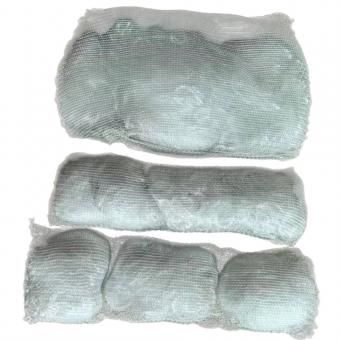
Fiberglass muffler packing mat should be purchased by more than thickness alone. For repeat exhaust silencer production, the buyer also needs to define material construction, mass per unit area, cut dimensions, installed quantity and the way each piece fits around the perforated core.
A 10 mm mat from one specification is not automatically equivalent to another 10 mm mat. The two materials may contain different amounts of glass fiber, use different binders or fiber structures, and require different cut areas to deliver the approved filling weight.
BSTFLEX supplies Fiberglass Exhaust Muffler Packing with customizable dimensions and also offers Fiberglass Exhaust Silencer Packing for mat- and sheet-based silencer assembly. This guide focuses on turning those materials into a repeatable OEM cutting and purchasing specification.
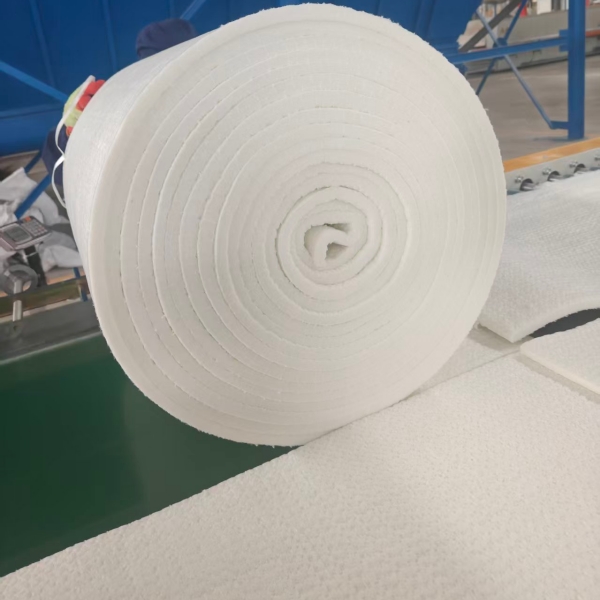
Thickness is useful for checking fit, but it does not tell purchasing how much fiberglass is present in a sheet.
For a complete fiberglass exhaust packing mat specification, define at least:
This separates three questions that are often mixed together: how thick the material is, how much material is contained in a given area, and how much material the finished muffler requires.
A muffler packing mat can be described by thickness in millimeters and by areal weight in grams per square meter. These values are related to the material construction, but one cannot be calculated reliably from the other without additional information.
| Specification | What It Describes | Why Purchasing Needs It |
|---|---|---|
| Thickness | The nominal depth of the mat under a defined measurement condition. | Helps evaluate initial fit, layer count and available clearance. |
| Areal weight | The mass of material per unit area, commonly expressed in g/m2. | Allows a cut-piece weight to be calculated from its area. |
| Piece dimensions | The usable width and length of one cut component. | Determines coverage and total supplied area. |
| Piece weight | The material mass contained in one cut component. | Provides a measurable production and receiving-inspection value. |
| Installed density | The approved fiber mass divided by the net volume allocated to the packing. | Helps control the complete installed packing specification. |
Do not use nominal thickness as a substitute for filling weight. Two mats can appear equally thick when relaxed but contain different amounts of fiberglass.
Fibrous material can compress easily. A thickness measurement therefore needs a defined condition.
Ask whether the value refers to:
These values should not be treated as interchangeable.
For an OEM drawing, use the measurement condition agreed during sample approval. If a production inspector uses a different compression force from the supplier, the same acceptable mat may produce a different measured thickness.
When the material has a defined areal weight, the nominal material weight in one rectangular piece can be calculated from:
Cut-piece weight = width × length × areal weight.
When width and length are entered in meters and areal weight is expressed in g/m2, the result is in grams.
For example only, assume an approved material has:
The nominal piece weight would be:
0.35 × 0.50 × 800 = 140 g.
These numbers are calculation examples only. They are not standard BSTFLEX product specifications or recommended muffler filling quantities.
Also confirm whether the quoted areal weight refers to glass fiber alone or the complete mat including binder, stitching or other constituents.
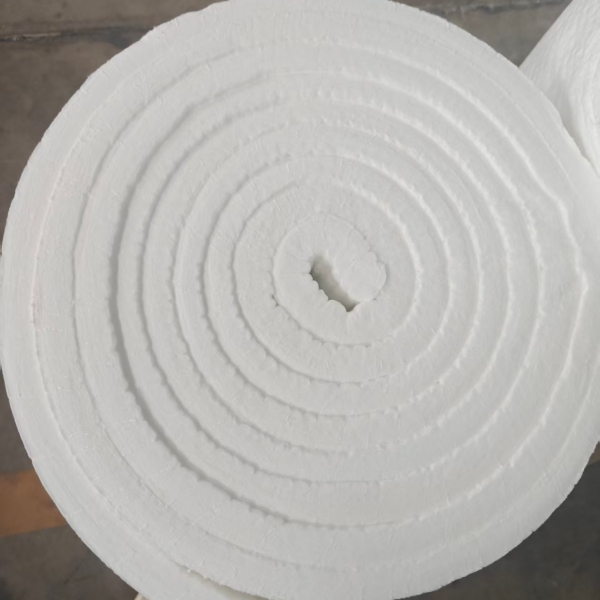
A useful custom cut muffler packing drawing begins with the internal assembly rather than with the available stock-sheet size.
Provide:
The cut pattern should show how the material enters the silencer and where its seam or overlap will be located.
For a simple cylindrical design, one rectangular sheet may be sufficient. For oval, offset-core or stepped silencers, multiple pieces or a shaped cut pattern may provide better control.
The seam arrangement affects material quantity and local thickness.
A butt joint places the two cut edges together without intentional overlap. An overlap places one part of the mat over another, increasing the amount of material in that local area.
Do not leave this decision entirely to the assembly operator. If overlap is required, define:
A production line should not compensate for a short sheet by increasing overlap elsewhere or compensate for an oversized sheet by removing an unmeasured strip.
Some silencers can be packed with one mat layer. Others may use multiple layers because of the required material quantity, geometry or approved packing construction.
When more than one layer is used, identify each piece on the cutting drawing. A specification such as "two layers of fiberglass" is incomplete if the layers use different sizes, joint positions or materials.
For example, an assembly instruction may identify:
Keep these component weights separate when possible. That makes later engineering changes easier to evaluate.
An oval shell does not automatically require loose fill. A fiberglass silencer packing mat can still be used if the cut pattern and installation method reproduce the approved distribution.
For an offset core, one side of the chamber may have substantially less radial clearance than the other. A uniform wrap around the core may therefore compress differently after insertion.
During sample development, inspect:
If additional cut pieces are needed to fill specific regions, identify them as separate parts rather than asking operators to add random offcuts.
Sheet cutting creates offcuts. They belong in production-yield calculations, but they should not automatically be inserted into another muffler.
Separate:
material purchased for the production lot
from
material approved for each finished silencer.
When offcuts are reusable in an approved second part number, document that cutting plan. Otherwise, classify them according to the agreed scrap or recycling procedure.
Adding small pieces simply to avoid waste can change local density and material distribution even when the total muffler weight remains close to target.
A lower price per square meter does not always create a lower material cost per silencer.
Calculate how many approved pieces can be cut from the actual supplied width and length.
For a rectangular layout:
Material utilization = total approved cut-piece area / purchased sheet area.
The practical result must also consider edge trimming, cutting kerf where relevant, defects and orientation restrictions.
For example, a stock width that appears larger may create more unusable side waste if the approved component dimensions do not nest efficiently.
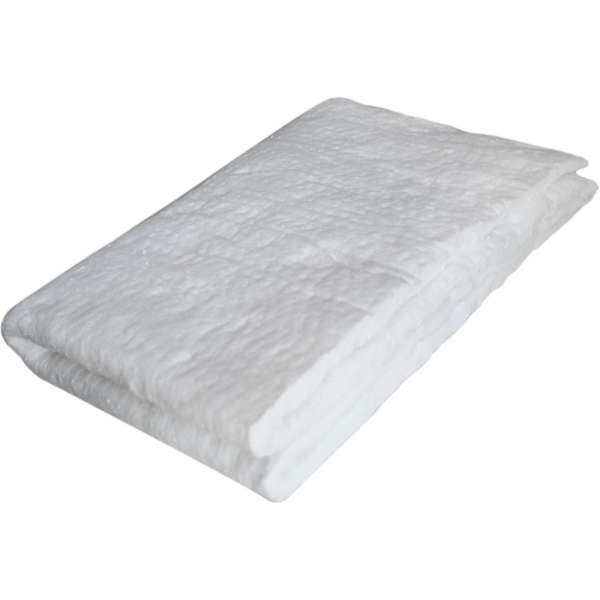
When requesting an OEM quotation, provide the final cut dimensions so the supplier can compare:
| Purchasing Option | Work Remaining at the Customer | Important Cost Factors |
|---|---|---|
| Full rolls | Cutting, identification, scrap management and component weighing. | Roll price, cutting labor, yield and inventory handling. |
| Standard sheets | Final trimming or cutting into the approved pattern. | Sheet size, usable area and leftover material. |
| Pre-cut rectangles | Placement and any specified wrapping or fastening. | Piece price, dimensional tolerance and packing quantity. |
| Custom-shaped pieces | Primarily assembly and inspection. | Cutting method, tooling where required, scrap allocation and order quantity. |
The best supply format depends on production volume and existing equipment. A factory with automated cutting may prefer roll material. A line assembling a stable, repetitive silencer may gain better control from individually cut pieces.
For repeat production, receiving inspection should check values that are directly related to the approved component.
Possible inspection fields include:
If areal weight is part of the purchasing specification, agree the sample size and calculation method. A single small test piece may not represent the complete production roll unless the sampling plan says it does.
Do not establish acceptance limits from one randomly selected sample. Agree tolerances during product approval and connect them to the drawing or purchase specification.
A fiberglass mat may be mechanically formed, bonded, stitched or produced through another process. Those constituents can affect handling and initial heating.
Ask the supplier to identify any binder or support material that remains in the product.
Do not apply the glass fiber's maximum temperature directly to:
Provide continuous and peak operating conditions with the measurement location when requesting a material review.
A conventional exhaust packing mat should not automatically be described as self-expanding.
BSTFLEX separately offers an Expanding Exhaust Packing Sheet using a compressed continuous-filament construction with heat-responsive restraint. That product has a specific release mechanism and installation process.
If your current requirement is simply a fiberglass mat with defined thickness and cut dimensions, keep that requirement separate. Do not add heat-release terminology unless the supplied construction actually uses it.
BSTFLEX supplies several fiberglass packing directions for exhaust silencers.
For yarn- or continuous-fiber-based filling, review Fiberglass Exhaust Muffler Packing and E-glass Exhaust Silencer Packing.
For a measured filling process, review Fiberglass Loose Fill Muffler Packing.
For OEM assembly requiring contained fiberglass, review the Fiberglass Muffler Packing Sock with Woven Glass Mesh Bag.
The broader choice between yarn, mat and loose fill is covered in the BSTFLEX fiberglass exhaust packing selection guide. This page focuses specifically on making mat supply measurable and repeatable.
| RFQ Field | Information to Provide |
|---|---|
| Application | Motorcycle, ATV, UTV, automotive, performance exhaust or industrial silencer. |
| Glass material | Required grade or existing approved material reference. |
| Mat construction | Fiber form and any known binder, stitching or support requirements. |
| Thickness | Nominal value and required measurement condition. |
| Areal weight | Target value and whether it refers to fiber or complete mat. |
| Cut dimensions | Width, length, shaped pattern and drawing revision. |
| Piece weight | Approved target or acceptable range where defined. |
| Assembly layout | Layer count, overlap, seam location and end clearance. |
| Operating conditions | Continuous and peak temperatures with measurement locations. |
| Commercial requirement | Sample quantity, production volume, packaging and labeling. |
Send the silencer drawing or internal dimensions when the cut pattern still needs development. BSTFLEX can review drawing- and sample-based requirements through its OEM muffler packing manufacturing service.
No. Thickness alone does not define the quantity or acoustic performance of the packing. Compare material construction, areal weight, installed quantity and the available space inside the silencer.
Thickness is a linear dimension. Density relates mass to volume. Areal weight relates mass to area. Keep these measurements separate when comparing materials.
BSTFLEX can discuss customized dimensions for suitable projects. Provide the cut size or drawing, material requirements, sample quantity and production demand so the cutting requirement can be reviewed.
Use the approved cutting and assembly specification. Some designs may use a defined overlap while others may use a butt joint or multiple pieces. Do not select overlap by a universal rule.
Equal weight is only one comparison point. The fiber construction and installed distribution differ, so the proposed mat should be validated in the actual silencer before repeat production.
For a quotation, send BSTFLEX the required fiberglass grade, nominal thickness, areal weight where specified, cut dimensions and dry packing quantity. Include the muffler cross-section or internal dimensions if the cutting pattern still needs to be developed.
Start with the BSTFLEX Fiberglass Exhaust Muffler Packing or Fiberglass Exhaust Silencer Packing. Other muffler packing materials and supply formats are available when the assembly requires a different construction.
Request Fiberglass Muffler Packing Mat Samples and an OEM Quote

No.10, Chuangxin North Road, Nanshan Park, Ningguo Economic and Technological Development Zone, Ningguo City, Anhui Province, China
tel/Whatsapp : 0086-15856303740
e-mail : sales@bstbraidedsleeve.com
Skype : vanesa-cheng