waar bent u naar op zoek?

Pre-weighed fiberglass muffler packing gives an exhaust manufacturer a defined dry fiber charge for each silencer instead of asking the assembly operator to estimate the quantity from a bulk bag. The purchasing objective is not simply a smaller package. It is a repeatable relationship between the approved fiber material, the net charge, the packing chamber and the production part number.
A pre-weighed charge can be supplied as loose fiber in an individual bag, as an identified batch of E-glass packing, or as part of a contained component. These formats are not interchangeable. The quotation and drawing should state whether the package is opened and emptied during assembly or whether the containing layer remains in the finished silencer.
BSTFLEX supplies Fiberglass Loose Fill Exhaust Muffler Packing and E-glass Exhaust Silencer Packing for exhaust manufacturers, repacking-kit suppliers and distributors. This guide explains how to specify filling weight, package configuration, tolerances, labeling and receiving checks for repeat OEM production.
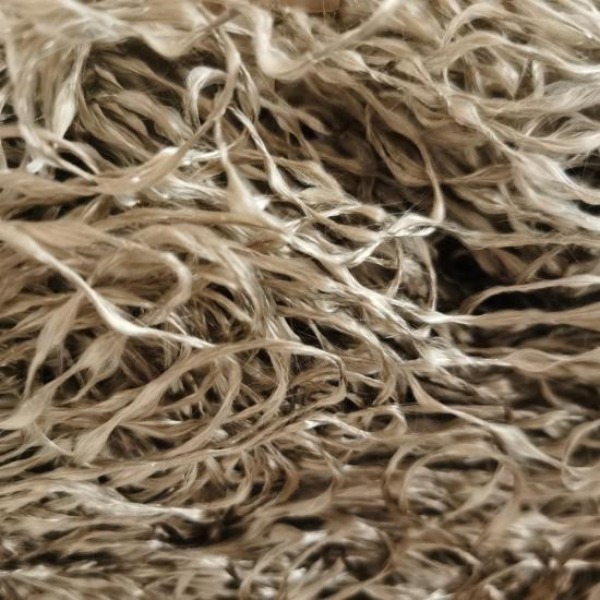
Pre-weighed muffler packing is material prepared to an agreed net quantity before it reaches the assembly station. The quantity may correspond to one silencer, several silencers or a controlled production batch.
The term should not be used without defining the unit of supply. A quotation may refer to:
Only the first and fourth examples are automatically single-charge packages. The others require additional instructions before production can determine how much material belongs in each exhaust assembly.
The most important purchasing distinction is between the acoustic fiber and everything used to contain or ship it.
| Weight Term | What It Includes | How It Should Be Used |
|---|---|---|
| Dry fiber charge | The approved fiberglass or E-glass packing intended for one silencer. | Primary control for the quantity of acoustic filling. |
| Inner bag or temporary package weight | The bag, film, paper or other container removed before installation. | Recorded as tare and excluded from the installed fiber charge. |
| Contained component weight | Fiber plus a cover, mesh, stitching or another layer that remains in the assembly. | Controlled separately from the fiber-only weight where the design requires both values. |
| Retail package weight | Product, labels, instructions and sales packaging. | Used for logistics and package checks, not as the sole filling specification. |
| Shipping weight | Individual products, cartons, pallets and transport packaging. | Used for freight calculations only. |
If the temporary bag is removed, the net fiber charge can be checked from:
Net fiber charge = gross filled-bag weight - empty bag tare.
Use the actual approved bag or an agreed average tare determined through the packaging specification. Do not subtract a nominal bag weight taken from a different material, size or supplier.
A target weight is meaningful only when it is linked to an approved material. The same number of grams does not establish equivalence between different glass grades, fiber lengths or packing constructions.
For fiberglass loose fill muffler packing, identify:
For E-glass exhaust packing, specify E-glass together with the yarn or fiber form. E-glass identifies the glass composition family; it does not define the package, filling method or quantity required for a particular muffler.
Keep the approved material reference on the packing label and the production drawing. A repeat order should not be accepted solely because the package weight remains unchanged.
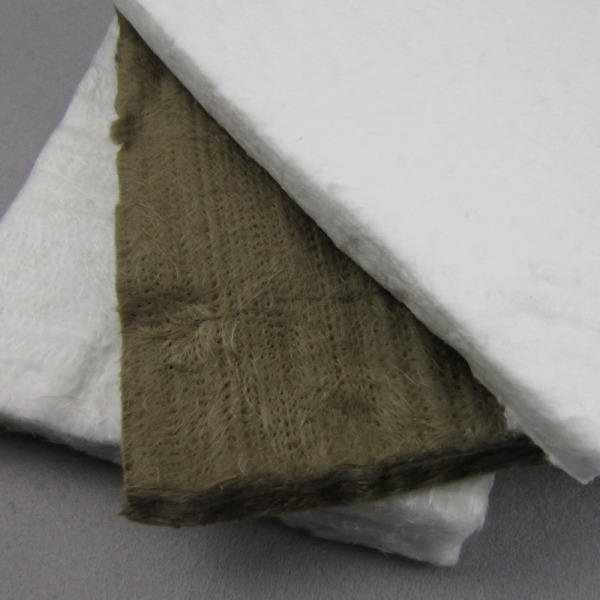
The best starting point is an existing validated dry fiber charge for the same silencer and material. If no approved value exists, the charge becomes a development parameter that must be evaluated in the complete exhaust assembly.
For a simple cylindrical packing chamber, the theoretical volume is:
V = π × (D2 - d2) × L / 4,000,000
When all dimensions are entered in millimeters:
The excluded inner envelope may be the perforated core alone or the core plus an approved metallic layer. Additional partitions, brackets and end fittings must also be considered where they occupy the packing region.
When an approved installed density is already known:
Dry fiber charge in grams = net packing volume in liters × approved density in g/L.
This equation converts a known design specification into a weight. It does not select the correct density for a new muffler.
Some silencers have a single continuous cavity. Others contain separate end pockets, stepped sections or divided packing zones.
Where the zones cannot communicate during filling, define the charge for each region:
A single total exhaust packing charge may still be used for purchasing, but the operator instruction should show how that charge is divided. For better control, the supplier can be asked to package the zones separately when the production process requires it.
Do not expect the operator to estimate the split from appearance. A correct total weight can still produce an incorrect internal distribution.
A pre-weighed loose charge is opened and distributed by the assembler. A contained component carries the fiber in a cover or mesh that may remain in the finished silencer.
| Supply Format | What the Supplier Controls | What the Customer Still Controls |
|---|---|---|
| Pre-weighed loose fiber bag | Material identity, net charge, package and label. | Opening, distribution, retention and assembly fit. |
| Pre-weighed zone packs | Material and quantity for each designated packing region. | Correct zone placement and complete assembly. |
| Contained packing sock or bag | Fiber charge, cover, finished dimensions and part identification. | Orientation, installation fit and silencer closure. |
| Complete repacking kit | Approved packing and all listed kit components. | Model-specific installation and final validation. |
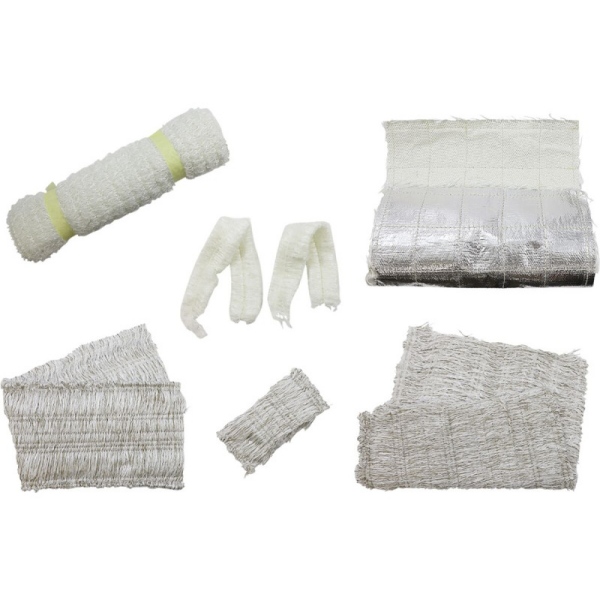
The BSTFLEX Fiberglass Muffler Packing Sock with Woven Glass Mesh Bag is an example of contained fiberglass packing. Its finished component weight includes the cover as well as the filling, so its purchasing specification should not be confused with a fiber-only bag from p196 or p229.
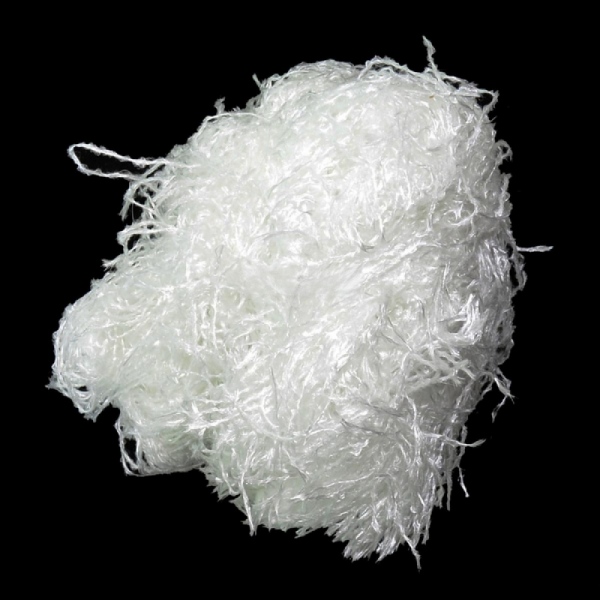
One labeled bag per silencer provides a clear line-side unit. This format is useful where operators build one part number repeatedly and the approved charge is stable.
Specify:
Several individually sealed charges may be placed in one master package. The package should state both the number of inner charges and the net quantity of each.
A label reading only “5 kg muffler packing” is not sufficient when production expects ten 500 g charges. The receiving check and picking instruction need to distinguish the master quantity from the unit charge.
Bulk muffler packing can be appropriate where the factory already has controlled weighing and filling stations. In that case, define the bulk package net weight and the required charge per silencer as separate purchasing fields.
Bulk supply should not be called pre-weighed per silencer unless the production line performs and records that weighing step.
A consumer or distributor package may contain a fixed quantity intended for a defined application range. Private-label artwork should state the actual material and package quantity without implying universal fitment.
Where the buyer wants several weight options, each pack size should have its own part number, label and carton configuration.
An OEM order should define a target charge and acceptable variation. The correct tolerance depends on the application, material handling, weighing process and sample approval. It should be agreed rather than copied from an unrelated product.
The specification should identify:
A lot average can be acceptable while individual bags fall outside the approved range. For a one-charge-per-silencer product, individual control is usually more directly related to assembly consistency.

The weighing method must be capable of resolving the agreed charge variation. A scale used for 20 kg shipping cartons may not be suitable for checking a much smaller individual packing charge.
Production and receiving instructions should include:
When the bag remains in the silencer, the approved component weight may include that bag. When the bag is discarded, its tare should be excluded. State this explicitly so the supplier and customer do not use different weight bases.
A dry fiber charge should be stored and handled in a way that preserves the approved material condition. Water, oil, dust and foreign fibers can alter the measured package weight without increasing the intended acoustic filling.
Use clean packaging and close partial bulk bags between weighing operations. Keep rejected or spilled material out of approved charges unless the quality procedure allows recovery and verifies its identity and condition.
Do not shake a bag to remove fibers after weighing and still record the original label value. The charge entering the silencer should correspond to the approved net quantity.
A practical custom muffler packing bag label may include:
Do not place unsupported sound-reduction, temperature or service-life claims on the label. The package identifies the supplied material and quantity; finished-exhaust performance belongs to the validated silencer configuration.
Before repeat production, assemble trial silencers with identified material lots and measured charges.
Record:
Once the sample is accepted, link the approved charge to the silencer drawing and material specification. If the fiber grade, chamber volume or surrounding layer changes, review whether the charge must also change.
A 500 g charge approved for one silencer is not a universal quantity for every four-stroke muffler. Likewise, a 250 g charge should not be assigned to every two-stroke exhaust without dimensional and application evidence.
The nominal installed quantity for a production lot is:
Net installed material = approved charge per silencer × number of silencers.
Purchasing may add an approved allowance for process setup, sampling, rejected packages or handling loss:
Purchased material = net installed material + approved process allowance.
The allowance is not extra fiber to add to every muffler. It should remain visible as a lot-planning value.
For individually pre-weighed charges, order quantity is normally based on the number of silencers plus the agreed spare or sampling quantity. For bulk material, calculate the total net requirement and package configuration separately.
Pre-weighed supply may add weighing, packaging and labeling cost at the supplier. Bulk supply may move those activities to the customer.
Compare:
Do not assume pre-weighed bags are automatically cheaper. Their value depends on whether they simplify the customer's actual process and improve control of the installed charge.
| RFQ Field | Information to Provide |
|---|---|
| Application | Silencer type, engine or equipment application and customer part number. |
| Material | Fiberglass or E-glass reference, fiber construction and required documents. |
| Charge | Target dry fiber weight and agreed tolerance or development status. |
| Zone split | One total charge or separate quantities for individual packing regions. |
| Package form | Single-charge bag, multiple inner bags, bulk bag or contained component. |
| Bag handling | Removed before installation or retained as part of the approved assembly. |
| Label | Part number, net weight, lot, barcode, language and customer branding. |
| Order quantity | Prototype charges, production quantity and expected repeat demand. |
| Carton configuration | Charges per inner pack, packs per carton and shipping marks. |
| Approval | Sample installation, sound test, retention trial and receiving checks. |
Where the filling weight is not known, send the silencer cross-section, core dimensions, internal shell profile and effective packed length. Mark the charge as a development item instead of asking the supplier to assume a universal quantity.
Drawing- and sample-based packing projects can be discussed through the BSTFLEX OEM Muffler Packing Manufacturing Service.
Only when 500 g is the approved charge for that particular silencer and material. Package weight alone does not establish compatibility. Use the drawing, chamber volume and validated filling specification.
No. A pre-weighed charge may still be loose fiber that the operator distributes. A cartridge is normally a more defined assembly-ready component. Some cartridges contain a controlled charge, but the terms describe different aspects of the product.
BSTFLEX can review individual packaging requirements for suitable projects. The material form, target net weight, package design, order quantity and labeling requirements need to be agreed during quotation and sample approval.
For a removable bag, the primary filling tolerance should normally refer to the net fiber charge. Total bag weight can be used as an additional check when the tare is controlled. For a retained contained component, both fiber-only and finished-component values may be specified.
Only after confirming that the material, chamber geometry and approved filling requirement are compatible. Similar engine size does not establish the same packing quantity.
For loose fiberglass charges, start with the BSTFLEX Fiberglass Loose Fill Exhaust Muffler Packing. For fluffy E-glass yarn-based material, review the BSTFLEX E-glass Exhaust Silencer Packing.
Send the approved material reference, target dry charge, packaging format, label requirements and production quantity. Other materials and contained formats are available in the BSTFLEX Muffler Packing range.
Request Pre-Weighed Muffler Packing Samples and an OEM Quote

No.10, Chuangxin North Road, Nanshan Park, Ningguo Economic and Technological Development Zone, Ningguo City, Anhui Province, China
tel/Whatsapp : 0086-15856303740
e-mail : sales@bstbraidedsleeve.com
Skype : vanesa-cheng