waar bent u naar op zoek?
Gold is not automatically better than aluminum for a reflective heat shield. The useful comparison is between two complete constructions installed in the same thermal environment: reflective facing, reinforcement, adhesive and finished coverage. A gold appearance does not establish a higher operating temperature, and a silver finish does not make a material a lower-grade alternative.
This guide compares flexible gold heat reflective sheets with aluminum-faced heat reflective sheets for automotive panels and equipment surfaces. It does not compare solid gold with solid aluminum, or a peel-and-stick laminate with a formed metal exhaust shield. BSTFLEX offers both sheet types within its heat barrier materials range.
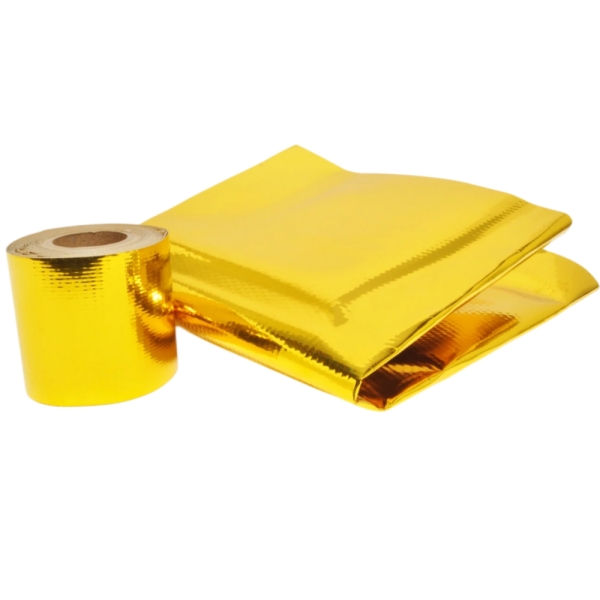
The name gold heat shield describes the visible finish but does not fully identify the material. Ask for the reflective coating, any polymer film, reinforcing fabric and adhesive to be specified separately. Do not infer a precious-metal coating from the color or treat different gold-colored products as the same construction.
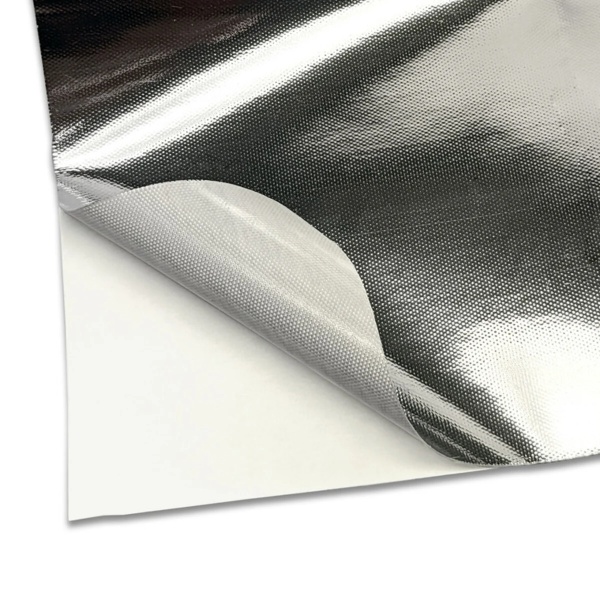
The same discipline applies to an aluminum heat reflective sheet. An aluminum foil facing, a metallized polymer film and a formed aluminum panel are different constructions. The word aluminum alone does not establish thickness, stiffness, temperature capability or suitability for direct contact with a hot component.
For purchasing, identify each candidate by its product reference and approved construction. The comparison below uses two BSTFLEX sheet products as starting points without assigning an unverified performance advantage to either.
| Comparison point | Gold reflective sheet | Aluminum-faced reflective sheet |
|---|---|---|
| Product starting point | Adhesive-backed gold heat reflective sheet | Adhesive-backed aluminum heat reflective sheet |
| General construction | Gold reflective facing, fiberglass reinforcement and pressure-sensitive adhesive backing. | Aluminum-faced reflective construction, fiberglass layer and pressure-sensitive adhesive backing. |
| Supply form being compared | Flexible sheet for coverage on a suitable receiving surface. | Flexible sheet for coverage on a suitable receiving surface, not a self-supporting metal panel. |
| Initial application review | Under-hood panels, bulkheads and localized radiant-heat exposure where a gold finish is specified. | Panels, composite engine covers and painted surfaces requiring an aluminum-faced radiant barrier. |
| Required approval | Exact facing construction, complete-laminate limits, adhesive compatibility and installed thermal performance. | Exact facing construction, complete-laminate limits, adhesive compatibility and installed thermal performance. |
Three different measurements are often presented as though they mean the same thing.
Radiant reflectance describes how much incident radiant energy a surface reflects under stated measurement conditions. It is not a direct measure of the temperature reached by the panel behind it. Ask what was measured and under which conditions before comparing percentage claims.
Temperature resistance describes the exposure a specified material or assembly can tolerate. The reflective face, reinforcing fabric, interlayer bond and mounting adhesive can have different limits. A radiant-exposure figure must not be used as the allowable temperature at the adhesive interface.
Installed temperature reduction is the result at a defined location in an actual test. It depends on the complete arrangement, including heat-source position, clearance, airflow, operating duration and heat arriving by other paths. Reflecting a stated percentage of radiant energy does not guarantee the same percentage reduction in component temperature.
For a gold-versus-aluminum decision, require compatible definitions and test conditions. A larger number on one data sheet is not a meaningful advantage when it describes a different measurement.
Shortlist a gold reflective heat barrier when the project calls for that finish on a visible under-hood panel, bulkhead or enclosure. Confirm the appearance using a physical sample, then assess the thermal and bonding requirements independently. Appearance can be a legitimate specification, but it is not evidence of greater heat protection.
Shortlist an aluminum heat reflective sheet when an aluminum-faced construction is required for a body panel, painted surface or composite engine cover. Compare its available dimensions, cut pattern and mounting requirements with the installation. Do not assume it is cheaper, more durable or more heat resistant until the quoted construction and samples have been evaluated.
For either candidate, identify the area that faces the radiant source and the temperature target at the protected housing. A reflective sheet can address that exposure, but it does not correct every source of intake heating. Hot intake air, heat conducted through attachments and radiant loading are separate paths.
Evaluate the sheet on the relevant exterior surface without obstructing openings, fasteners or service access. Do not turn a lower housing-surface temperature into a claim about intake-air temperature or engine output unless those quantities have also been measured.
Where the design requires substantial insulating thickness, a stand-off structure or impact protection, neither thin sheet should be assumed to provide the entire solution. Review a suitable mat, supported composite or mechanically mounted shield instead. Changing the visible color does not change the basic function of the assembly.
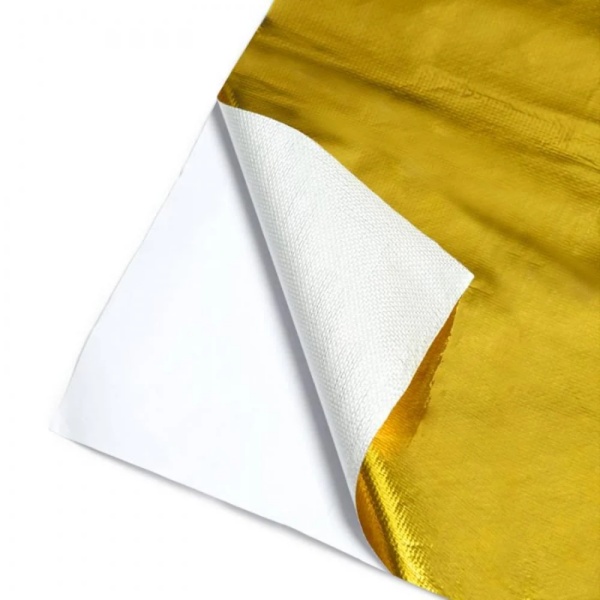
A gold sheet and an aluminum-faced sheet can have similar installation formats without using identical adhesives. Request the adhesive specification for each candidate, including its service conditions, compatible substrates and application requirements. Do not assume a particular adhesive chemistry from the color of the reflective face.
Run adhesion checks on the actual painted metal, plastic or composite surface. Record the coating, surface preparation, application pressure and required dwell time. An immediate hand-peel comparison does not establish the bond's performance after repeated heat exposure.
Keep the adhesive-interface temperature within the verified limit of the selected construction. Additional clips may help retain a part, but they do not increase the allowable temperature of the adhesive or prevent an unsuitable laminate from degrading. The peel and stick heat shield adhesive guide covers the bonding checks separately.
Use a defined comparison rather than placing two loose sheets near a heat source and judging which feels cooler. The objective is to establish which construction meets the requirements of the protected part.
Use matching receiving panels, the same exposed area, equivalent mounting preparation and a controlled distance from the source. Face each reflective surface toward the radiant exposure. Record the finished thickness and any differences in the proposed installation.
Keep heat-source settings, airflow, ambient conditions and exposure duration comparable. When samples are tested in different positions, account for uneven heating. Repeat the comparison or exchange positions where practical instead of assuming both locations receive identical exposure.
Define measurement points before the test: for example, the protected panel behind the sheet and a critical location near a cutout. Where bonding performance is important, include a suitable method of assessing the adhesive-interface temperature. Use appropriately rated sensors and a mounting method that does not materially alter the comparison.
Record the temperature over the relevant operating cycle rather than reporting one convenient reading. Set an acceptance limit for the protected part and assess each sample against it. A no-shield reference can help quantify the change where that test is safe and appropriate.
Reflective surfaces can produce misleading apparent temperatures on an infrared camera because the instrument receives reflected radiation as well as radiation emitted by the surface. Pointing the same camera at gold and silver sheets with one assumed emissivity setting is not a reliable comparison by itself.
Use an appropriate contact measurement on the receiving surface or a validated infrared method that accounts for emissivity and the reflected background. Painting over the exposed reflective face to make it easier to measure changes the surface being tested; it should not be treated as an unchanged heat-shield sample.
Check for edge lift, blistering, layer separation, abrasion and loss of fit after the agreed thermal and environmental cycles. Record appearance changes separately from measured thermal performance. A sheet that remains attached has not necessarily retained every required property.
This test approach produces an application-specific choice. It is not a universal ranking of every gold and aluminum heat shield material.
For an OEM program, compare the finished part rather than the price of an unmatched sheet size. Include material usage, cutting yield, conversion, liner handling, installation time and the scrap allowance agreed for the project. Keep any one-time tooling or validation costs visible rather than hiding them in an unclear unit-price comparison.
A custom outline may use material differently from a rectangular blank. BSTFLEX die-cut heat reflective mats provide a route for reviewing finished shapes and openings. Confirm that the selected gold or aluminum-faced construction is suitable for the required converting process.
Send one application brief for both candidates. Include the heat source, protected-side temperature target, minimum clearance, mounting substrate and coating, available thickness, environment and proposed attachment. Mark unknown operating values as development requirements.
Provide a drawing with the finished outline, openings, heat-facing side and critical dimensions. State whether appearance is a requirement or simply a preference. Separate the sample quantity from production batch size and estimated annual demand.
Ask for each candidate to be identified by its construction and applicable technical documentation. Through its heat barrier material manufacturing and OEM supply services, BSTFLEX can review sheet supply, cut panels and custom-part requirements against the project specification.
Not as a general rule. Compare the exact facing, substrate, adhesive and installed performance. A color preference can distinguish otherwise acceptable options, but it should not replace thermal and durability approval.
The color does not establish that. Request the facing and coating specification rather than inferring composition from the product name. This guide concerns flexible reflective laminates, not solid-gold sheet.
Do not treat a panel-protection sheet as direct exhaust insulation. Direct contact creates a different exposure for the facing, laminate and adhesive. Use a construction explicitly approved for that application rather than choosing between gold and silver on appearance.
The outline can be submitted for both, but each finished sample needs a fit and process review. Differences in thickness, flexibility, backing and edge behavior may affect installation. Approve the drawing and material construction together.
Send your gold or aluminum heat reflective sheet requirements to BSTFLEX. Include the installation conditions with the drawing so the quotation addresses the finished thermal barrier rather than color alone.

No.10, Chuangxin North Road, Nanshan Park, Ningguo Economic and Technological Development Zone, Ningguo City, Anhui Province, China
tel/Whatsapp : 0086-15856303740
e-mail : sales@bstbraidedsleeve.com
Skype : vanesa-cheng